


Hey there! As a supplier of battery management systems (BMS), I've seen firsthand the differences between active and passive BMS. In this blog, I'm gonna break down the advantages of an active BMS over a passive one.
Let's start with the basics. A battery management system is like the brain of a battery pack. It's responsible for monitoring and controlling the battery's performance, ensuring its safety, and extending its lifespan. There are two main types of BMS: passive and active.
Passive BMS: The Basics
A passive BMS is a relatively simple system. Its main job is to balance the cells in a battery pack. When a battery pack is made up of multiple cells, these cells can charge and discharge at different rates. Over time, this can lead to some cells being over - charged or under - charged, which is bad for the battery's health. A passive BMS uses resistors to bleed off excess charge from the cells that are more fully charged, bringing all the cells to a similar state of charge.
It's a cost - effective solution, and it works well for small - scale applications where the charging and discharging rates are relatively low. However, it has its limitations.
Active BMS: A Step Up
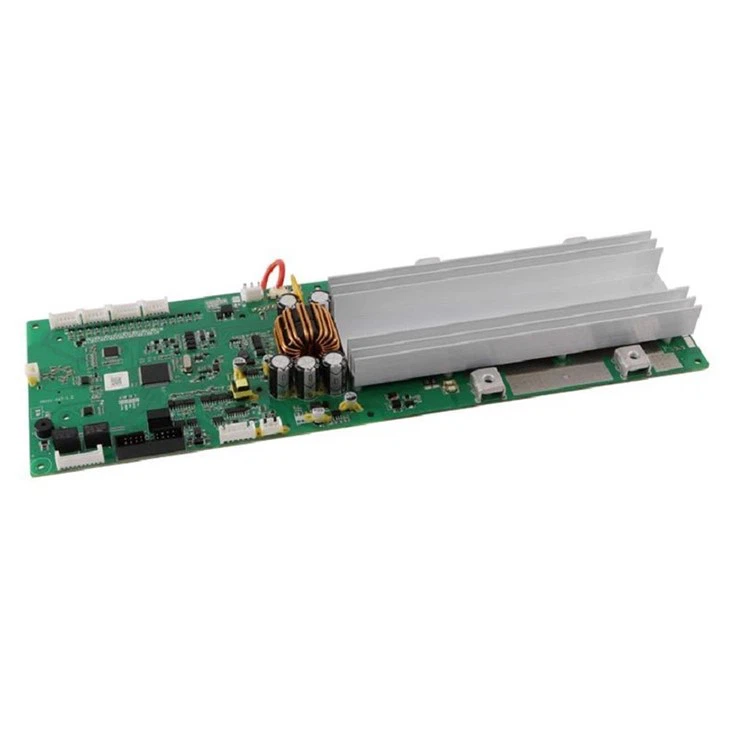
An active BMS takes things to the next level. Instead of just bleeding off excess charge, it can actively move charge between cells. This means it can transfer energy from a fully charged cell to a less - charged cell, which is much more efficient than simply wasting the excess energy as heat like a passive BMS does.

1. Efficiency
One of the biggest advantages of an active BMS is its efficiency. In a passive BMS, the excess energy is dissipated as heat through resistors. This is not only a waste of energy but can also cause the battery pack to heat up, which can further degrade the battery's performance and lifespan.
With an active BMS, the energy is transferred between cells, so there's less energy loss. This means that the battery pack can make better use of the available energy, resulting in longer run - times and better overall performance. For example, in an electric vehicle, an active BMS can help the vehicle travel further on a single charge.
2. Cell Balancing
Active BMS provides much better cell balancing compared to passive BMS. As I mentioned earlier, passive BMS only balances cells by dissipating excess charge. This method is slow and not very precise. In contrast, an active BMS can quickly and accurately balance the cells, ensuring that all cells in the battery pack are at the same state of charge.
This is crucial for the longevity of the battery pack. When cells are not balanced, some cells may be over - stressed, leading to premature failure. By keeping all cells balanced, an active BMS can significantly extend the lifespan of the battery pack.
3. Safety
Safety is a top priority when it comes to battery systems. An active BMS has advanced safety features that passive BMS lacks. It can monitor the voltage, current, and temperature of each cell in real - time. If it detects any abnormal conditions, such as over - voltage, under - voltage, over - current, or over - temperature, it can take immediate action to protect the battery.
For example, if a cell is over - heating, the active BMS can reduce the charging or discharging current to prevent further damage. It can also isolate the faulty cell if necessary, preventing the problem from spreading to other cells in the pack.
4. Flexibility
Active BMS offers more flexibility in terms of battery configuration. It can handle different types of batteries, such as lithium - ion, lead - acid, and nickel - metal hydride. It can also be used in a wide range of applications, from small portable devices to large - scale energy storage systems.
Whether you're looking for a 50A Solar Battery Bms for your home solar system, a 200A Lithium Battery Bms for an electric vehicle, or a 300A Home Battery Bms for a large - scale home energy storage setup, an active BMS can be customized to meet your specific needs.
Real - World Applications
Let's take a look at some real - world applications where an active BMS shines.
Electric Vehicles
In electric vehicles, the battery pack is the heart of the vehicle. An active BMS can optimize the performance of the battery, ensuring that the vehicle has a long range and a long battery life. It can also improve the safety of the vehicle by preventing over - charging and over - discharging of the battery.
Renewable Energy Storage
With the increasing popularity of renewable energy sources like solar and wind, energy storage systems are becoming more important. An active BMS can help manage the charging and discharging of the battery in these systems, ensuring that the energy is stored and used efficiently.
Portable Devices
For portable devices like laptops and smartphones, an active BMS can extend the battery life and improve the performance of the device. It can also protect the battery from damage due to over - charging or over - discharging.
Why Choose Our Active BMS?
As a BMS supplier, we offer high - quality active BMS solutions. Our BMS are designed with the latest technology to provide maximum efficiency, safety, and flexibility. We have a team of experts who can help you choose the right BMS for your specific application.
If you're in the market for a battery management system, whether it's for a small - scale project or a large - scale industrial application, we'd love to hear from you. Our active BMS can offer you all the advantages I've mentioned above, and more.
If you're interested in learning more about our products or have any questions, don't hesitate to reach out. We're here to help you make the best decision for your battery management needs.
Conclusion
In conclusion, an active BMS offers significant advantages over a passive BMS. From better efficiency and cell balancing to enhanced safety and flexibility, it's the clear choice for most applications. If you're looking for a reliable and high - performance battery management system, consider an active BMS. And if you need a supplier, we're here to assist you every step of the way.
References
- Battery Management System Basics, Battery University
- Active vs. Passive Battery Balancing, Power Electronics News
- The Importance of Battery Management in Electric Vehicles, IEEE Spectrum


