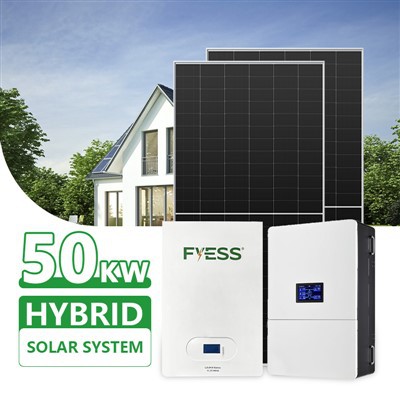
As a seasoned provider of Commercial Energy Storage Systems (ESS), I've witnessed firsthand the transformative impact these systems have on businesses across various sectors. In this blog post, I'll delve into the main components of Commercial ESS, shedding light on their functions and importance. Whether you're a business owner looking to optimize your energy usage or an industry professional seeking in-depth knowledge, this guide is tailored to meet your needs.
Battery Modules
At the heart of any Commercial ESS lies the battery module. These modules are the powerhouses that store electrical energy for later use. They come in various chemistries, each with its own set of advantages and disadvantages. The most common battery chemistries used in Commercial ESS include lithium-ion, lead-acid, and flow batteries.
Lithium-ion batteries are the preferred choice for many Commercial ESS applications due to their high energy density, long cycle life, and low self-discharge rate. They are also relatively lightweight and compact, making them easy to install and integrate into existing systems. Lithium-ion battery modules are available in a variety of configurations, allowing businesses to customize their ESS based on their specific energy storage requirements.
Lead-acid batteries, on the other hand, are a more traditional option that has been used in energy storage applications for decades. They are known for their low cost and high reliability, making them a popular choice for applications where cost is a major concern. However, lead-acid batteries have a lower energy density and shorter cycle life compared to lithium-ion batteries, which means they may require more frequent replacement.


Flow batteries are a newer technology that offers several advantages over traditional battery chemistries. They have a longer cycle life, higher energy efficiency, and can be easily scaled up or down to meet changing energy storage needs. Flow batteries are also more environmentally friendly than lithium-ion and lead-acid batteries, as they use non-toxic and non-flammable electrolytes.
Battery Management System (BMS)
The Battery Management System (BMS) is a critical component of any Commercial ESS. It is responsible for monitoring and controlling the performance of the battery modules, ensuring their safe and efficient operation. The BMS performs several key functions, including:
- Cell Monitoring: The BMS continuously monitors the voltage, temperature, and state of charge of each individual battery cell. This allows it to detect any potential issues early on and take corrective action to prevent battery damage or failure.
- Charge and Discharge Control: The BMS regulates the charging and discharging of the battery modules to ensure they operate within their safe operating limits. It also optimizes the charging process to maximize the battery's lifespan and efficiency.
- Balancing: The BMS balances the charge levels of the individual battery cells to ensure they are all operating at the same level. This helps to prevent overcharging or undercharging of individual cells, which can lead to reduced battery performance and lifespan.
- Fault Detection and Protection: The BMS is equipped with a variety of sensors and protection mechanisms to detect and respond to faults in the battery system. It can detect issues such as overvoltage, undervoltage, overcurrent, and short circuits, and take appropriate action to protect the battery modules and the rest of the ESS.
Power Conversion System (PCS)
The Power Conversion System (PCS) is another essential component of a Commercial ESS. It is responsible for converting the DC power stored in the battery modules into AC power that can be used by the electrical grid or the business's electrical equipment. The PCS performs several key functions, including:
- Inversion: The PCS converts the DC power from the battery modules into AC power at the appropriate voltage and frequency. This allows the energy stored in the battery modules to be used to power the business's electrical equipment or to be fed back into the electrical grid.
- Rectification: The PCS can also convert AC power from the electrical grid into DC power to charge the battery modules. This allows the ESS to store excess energy from the grid during off-peak hours and use it during peak hours when electricity prices are higher.
- Grid Connection and Control: The PCS is responsible for connecting the ESS to the electrical grid and ensuring that it operates in compliance with the grid's regulations and standards. It can also control the flow of power between the ESS and the grid, allowing the business to optimize its energy usage and reduce its electricity costs.
- Power Quality Management: The PCS can improve the power quality of the electrical grid by providing voltage regulation, frequency control, and power factor correction. This helps to ensure that the electrical equipment in the business operates efficiently and reliably.
Energy Management System (EMS)
The Energy Management System (EMS) is the brain of a Commercial ESS. It is responsible for monitoring and controlling the overall operation of the ESS, including the battery modules, the BMS, the PCS, and any other connected devices. The EMS performs several key functions, including:
- Energy Monitoring and Analysis: The EMS continuously monitors the energy consumption and production of the business, as well as the state of charge of the battery modules. It analyzes this data to identify opportunities to optimize the energy usage of the business and reduce its electricity costs.
- Load Forecasting: The EMS uses historical energy consumption data and weather forecasts to predict the future energy demand of the business. This allows it to plan the charging and discharging of the battery modules in advance, ensuring that the ESS is able to meet the business's energy needs at all times.
- Control and Optimization: The EMS controls the operation of the ESS based on the energy monitoring and analysis results. It can optimize the charging and discharging of the battery modules to minimize the business's electricity costs, maximize the use of renewable energy sources, and provide backup power in the event of a power outage.
- Remote Monitoring and Management: The EMS can be accessed remotely via a web-based interface or a mobile app. This allows the business owner or operator to monitor the performance of the ESS in real-time, receive alerts and notifications, and make adjustments to the system settings as needed.
Enclosure and Cooling System
The enclosure and cooling system are important components of a Commercial ESS that help to protect the battery modules, the BMS, the PCS, and other components from the environment. The enclosure provides a physical barrier between the components and the outside world, protecting them from dust, moisture, and other contaminants. The cooling system helps to maintain the temperature of the battery modules and other components within their safe operating limits, ensuring their long-term reliability and performance.
There are several types of enclosures and cooling systems available for Commercial ESS, depending on the specific application and requirements. Some common types of enclosures include Cabinet ESS, Industrial ESS, and Energy Storage Container. These enclosures are designed to be durable, weather-resistant, and easy to install and maintain.
The cooling system can be either air-cooled or liquid-cooled, depending on the size and power of the ESS. Air-cooled systems are typically used for smaller ESS, while liquid-cooled systems are used for larger ESS that require more efficient cooling. The cooling system is designed to remove the heat generated by the battery modules and other components during operation, preventing them from overheating and damaging the system.
Conclusion
In conclusion, a Commercial ESS is a complex system that consists of several key components, including battery modules, a Battery Management System (BMS), a Power Conversion System (PCS), an Energy Management System (EMS), and an enclosure and cooling system. Each component plays a critical role in the performance, reliability, and efficiency of the ESS.
As a Commercial ESS provider, we understand the importance of these components and the need to select high-quality products that are designed to meet the specific requirements of each customer. We work closely with our customers to understand their energy storage needs and develop customized solutions that are tailored to their business.
If you're interested in learning more about Commercial ESS and how they can benefit your business, we invite you to contact us to schedule a consultation. Our team of experts will be happy to answer your questions and provide you with more information about our products and services.
References
- Newman, J., & Thomas-Alyea, K. E. (2004). Electrochemical Systems (3rd ed.). Wiley-Interscience.
- Kumbhare, D. P., & Jadhav, S. S. (2012). A review on energy storage systems for wind power applications. Renewable and Sustainable Energy Reviews, 16(1), 441-450.
- Huggins, R. A. (2009). Advanced electrical energy storage for transportation and grid applications. Current Opinion in Solid State and Materials Science, 13(1), 1-7.