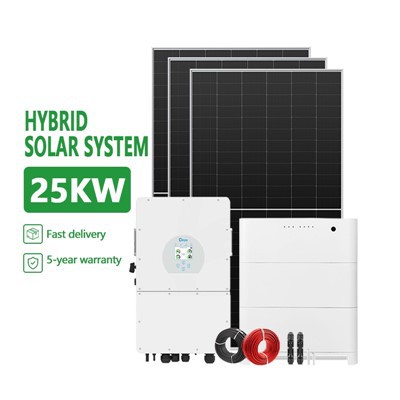
Hey everyone, thanks for stopping by my blog! I’ve been working in the solar game for over 8 years now, and one question I get asked more than any other is, “What’s the maximum number of solar panels I can put in a 10kw hybrid solar system?” It’s totally fair—most folks don’t want to waste cash on extra panels that won’t work, and they definitely don’t want to skimp and leave money on the table. As a supplier who deals with these systems every single day, I’m here to break this down like we’re chatting over a coffee, no jargon, no confusing math you’d forget by the time you finish reading.
First off, let’s get one thing straight: a 10kw hybrid solar system’s “max panel count” isn’t a random number I pull out of thin air. It’s tied directly to the system’s inverter, because that’s the brain that turns the sun’s energy into power your home (or business) can use. Hybrid systems are different from grid-tied ones because they have a battery backup, right? They keep running when the grid goes down, which is why everyone’s obsessing over them now. If you’re curious about how these setups work, check out our site’s page on Solar Energy System Hybrid here.
Now, let’s talk numbers, but keep it simple. Most residential solar panels you’ll find these days are around 400 to 450 watts each. That’s the standard—cheaper panels might be lower, but they’re usually not worth the hassle, and high-efficiency ones can hit 500 watts, but they’re more for small roofs. The big rule here is: the total wattage of your solar panels (that’s called the “array size”) can’t exceed what the inverter can handle. Wait, but a 10kw hybrid system—does that mean the array has to be exactly 10,000 watts? Nope, that’s a common myth. The 10kw rating is the inverter’s maximum output at peak sun, but inverter manufacturers usually build in a little extra headroom for the panels. Most residential hybrid inverters have a “PV input limit” that’s 125% to 150% of their AC output. For a 10kw inverter, that means the PV can go up to 12.5kw to 15kw total in wattage.
Let’s do the math with standard 400w panels first. If the PV max is 15kw, that’s 15,000 divided by 400, which equals 37.5 panels. Since you can’t have half a panel, that rounds down to 37. Wait, but if you use higher-efficiency 450w panels? 15,000 divided by 450 is 33.3, so 33 panels. And if you go with 500w panels? That’d be 30 panels exactly at 15,000 watts. But hold on—this isn’t just about cramming as many panels as possible. I see homeowners make this mistake all the time: they buy extra panels to hit that max PV number, but then they don’t have enough roof space, or the panels end up producing less because of shading, or they waste money on unnecessary panels that just sit there not working hard.
Let’s get into the real-world factors that matter way more than just the inverter limit. First up: roof size and layout. I’ve had a customer come to me last year who wanted 40 panels on a tiny 1,200 sq ft roof—turns out there wasn’t enough space, and the ones they put on had to be squeezed so close that shading from their neighbor’s tree cut their production by 15%. That’s a waste. Another factor: inverter type. Not all 10kw hybrid inverters are the same. Some are designed for residential use, some for small businesses. If you go with a high-voltage hybrid inverter (we have those here), their PV input limits are a bit different than low-voltage ones. If you want to deep dive into that, check out High-voltage Hybrid System on our site.
Also, battery size plays a role, even if it’s indirect. Hybrid systems store excess energy in batteries for later use, so if you load up on extra panels beyond what your home uses during the day, that extra energy goes into the battery. But if your battery is small, you can only store so much, so those extra panels might just send power back to the grid (which you might not want if you wanted backup power). That’s why when we quote a 10kw hybrid solar system, we don’t just tell someone “you can have 37 panels”—we look at their roof, their energy usage, their battery needs, and even their local sun hours. Speaking of batteries, if you have a bigger setup, like commercial hybrid systems, we have 50kW High-power Energy Storage System – Commercial & Industrial Peak Shaving Solution for that, but today we’re talking about the 10kw residential kind.
Wait, let’s clear up another myth: some people think the max panel count is fixed, but it actually depends on panel wattage. If you use 350w panels (a less common, older type), then 15,000 divided by 350 is about 42, but those panels are less efficient, so you’d need more of them to get the same power. But here’s the thing: most of our customers go with 400w to 450w panels these days because they’re the sweet spot for cost and efficiency. So for our standard 10kw hybrid system, the max number of panels we’d recommend is between 33 and 37—with 35 being a common sweet spot. Why not more? Let’s use an example: if you put 40 of the 400w panels, that’s 16,000 watts, which is above the 15kw PV limit most inverters have. You might think “more is better,” but the inverter can’t handle that extra power, so it would clip the excess. That means those 5 extra panels are wasted—they’d produce power that the inverter can’t use, so you lose out on that energy. I’ve seen customers drop their energy savings by 10% because they over-paneled their system.
Another real-world tip: local weather and sun hours. If you live in a place like Arizona that gets 6+ peak sun hours a day, you can probably go closer to the max panel count because you’ll use (or store) more of that energy. If you live in the Pacific Northwest, where peak sun hours are 3 to 4 a day, you don’t want to cram 37 panels—you’ll end up with more energy than you can use, and if your battery can’t hold it, it’s just wasted. We always tailor the panel count to the customer’s location when we build a 10kw hybrid solar system. If you want to see our full 10kw Hybrid Solar System specs, you can check that link here.
Wait, what about microinverters? Some people use those with their panels, instead of a central hybrid inverter. Does that change things? A little—each panel has its own microinverter, so you don’t have a central PV input limit. But then you have to make sure the total wattage of all the panels adds up to something the battery and system can handle. Even with microinverters, I still don’t recommend overdoing it. We had a customer with microinverters who put 40 panels on a 10kw hybrid system, and their battery was only 10kwh—they were throwing away 25% of their energy because the battery was full and the grid was down. It was a waste, and they wished they’d gone with 35 panels instead.
Let’s recap so you don’t get confused. The short answer for a standard residential 10kw hybrid system (using 400w panels, standard inverter, reasonable battery size, typical residential usage) is: the maximum number of panels is around 37, but we usually recommend sticking to 33 to 35 for most people. Why? Because it balances cost, space, energy production, and battery capacity. Going above that means wasting money on panels that don’t contribute extra power, and going below means leaving savings on the table.


Here’s the thing: when I sell a 10kw hybrid system, I’m not trying to make you buy the most panels possible. I’m trying to make sure you get the best return on your investment. Solar panels last 25+ years, so you want to make sure every single one is working as hard as it can. If you’re thinking about going solar, don’t just Google “max panels for 10kw hybrid” and go for the top number. Talk to someone who knows the ins and outs, like us, who can look at your specific situation. We’ve installed hundreds of these systems, and we’ve seen what works and what doesn’t.
If you’re wondering how our hybrid systems differ from others, check out Hybrid Solar Power System on our site—we use quality inverters that have the right PV headroom, and we pair them with batteries that fit your energy needs, so you don’t have to worry about wasting energy on extra panels. We also take care of the installation, making sure your panels are placed to get maximum sun, no shading issues, so you get every bit of power your panels can produce.
At the end of the day, solar is a big investment, and you want to get it right. The maximum number of solar panels in a 10kw hybrid system isn’t a one-size-fits-all number, but with standard panels and typical home setups, it’s around 33-37. But don’t just take my word for it—do your research, ask questions, and talk to a trusted supplier. If you’re ready to chat about your specific needs, our team is here to help you build a system that’s perfect for your home, your budget, and your energy goals. No pressure, no sales pitch—just honest advice from someone who’s been in the solar game for years.
References:
- National Renewable Energy Laboratory (NREL) - Solar Photovoltaic System Design Basics
- Solar Energy Industries Association (SEIA) - Hybrid Solar System Guidelines for Residential Applications
- International Electrotechnical Commission (IEC) - Standard for Hybrid Inverter PV Input Limits