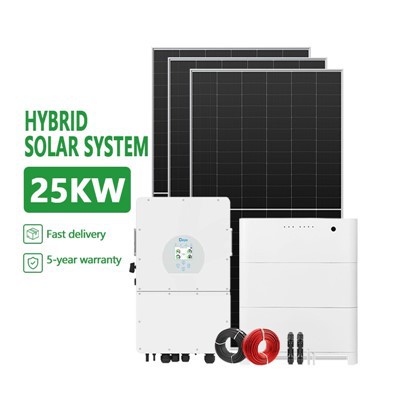
Containerized Battery Energy Storage System (BESS)
Utility-Scale Solar Integration & Custom Solutions
We engineer and manufacture containerized Battery Energy Storage Systems (BESS) specifically designed for utility-scale solar farms, renewable energy developers, EPC contractors, and independent power producers (IPPs).
Our fully integrated systems combine prismatic Lithium Iron Phosphate (LiFePO4) battery racks, a multi-tier Battery Management System (BMS), an intelligent Energy Management System (EMS), and a high-efficiency Power Conversion System (PCS) within standard 20-foot or 40-foot ISO shipping containers. By capturing excess photovoltaic generation during peak daylight hours, our systems eliminate curtailment, bridge the evening demand ramp, and enable flexible power dispatch to maximize project ROI.
Core Operational Functions
Solar Curtailment Mitigation
Mechanism: When solar generation exceeds local grid interconnection limits, excess energy is automatically diverted into the battery banks instead of being wasted.
Operational Impact: Recovers lost generation capacity and raises the overall asset utilization rate of the photovoltaic plant.
Output Smoothing and Ramp-Rate Control
Mechanism: Rapid cloud cover transitions cause sharp fluctuations in solar output. Our sub-second response inverters and localized BMS compensate for these drops instantly.
Operational Impact: Ensures strict compliance with regional grid code requirements for voltage and frequency stability at the point of interconnection (POI).
Time-Shift and Energy Arbitrage
Mechanism: Midday generation is stored and discharged during evening peak-demand hours, avoiding low pricing intervals.
Operational Impact: Maximizes revenue through multi-cycle dispatch strategies tailored directly to local wholesale energy market structures.
Technical Specifications & Architecture
|
Component / Parameter |
Specification Details |
|
Cell Chemistry |
Prismatic Lithium Iron Phosphate (LiFePO4) |
|
System Capacity |
Modular configuration from 1 MWh to 100+ MWh |
|
Nominal Voltage |
1,000V DC to 1,500V DC system architecture |
|
Cycle Life |
>= 6,000 cycles at 80% Depth of Discharge (25°C) |
|
Round-Trip Efficiency |
>= 90% (AC-to-AC, inclusive of auxiliary loads) |
|
Thermal Management |
Liquid cooling or smart air conditioning with automated HVAC balancing |
|
Enclosure Rating |
IP54 / NEMA 3R (Optional offshore anti-corrosion coating available) |
|
Communication Protocols |
Modbus TCP, IEC 60870-5-104, DNP3 |
|
Compliance & Certifications |
IEC 62619, UL 9540, UL 9540A, UN38.3, CE |
System Subsystems
High-Density Battery Racks
Utilizes automotive-grade prismatic LiFePO4 cells configured in series-parallel strings.
Features integrated physical fire barriers and aerosol-based fire suppression modules per rack compartment to completely prevent thermal propagation.
Hierarchical Battery Management System (BMS)
Slave BMS (BMU): Monitors individual cell voltages, temperatures, and internal resistance.
Master BMS (BCU): Collects string data, calculates real-time State of Charge (SOC) and State of Health (SOH), and manages active/passive cell balancing.
Protection Protocols: Instantly trips DC contactors during over-voltage, under-voltage, over-current, or extreme temperature anomalies.
Smart Energy Management System (EMS)
Runs optimization algorithms driven by weather forecasting models, site load profiles, and dynamic tariff structures.
Supports remote telemetry, automated fault logging, and manual override functions via an industrial SCADA dashboard or secure cloud portal.
Climate Control & Safety Infrastructure
Liquid Cooling Architecture: Maintains cell temperature differentials within +/- 2°C, significantly extending cell degradation cycles.
Comprehensive Safety Suite: Includes hydrogen gas exhaust sensors, optical smoke detectors, deflagration panels, and dual-agent fire suppression systems.
Typical Applications
Standalone Solar + Storage Co-location: DC-coupled or AC-coupled configurations sharing existing substation infrastructure.
Peak Shaving & Capacity Reserves: Providing firm, reliable capacity to utilities under long-term Power Purchase Agreements (PPAs).
Microgrid Integration: Stabilizing hybrid microgrids combining solar, wind, and diesel generation assets.
Manufacturing & Factory Quality Assurance
Every containerized unit undergoes rigorous Factory Acceptance Testing (FAT) prior to dispatch:
Cell Sorting: Cells are strictly matched by capacity, internal resistance, and voltage curves to minimize string imbalance.
Electrical Run-in: Full-power charge and discharge cycle testing executed under industrial load banks.
Communication & Safety Verification: End-to-end integration tests confirming BMS trip signals, EMS telemetry response, and HVAC automation loops.
FAQ
Hot Tags: solar farm energy storage system, China solar farm energy storage system manufacturers, suppliers, factory