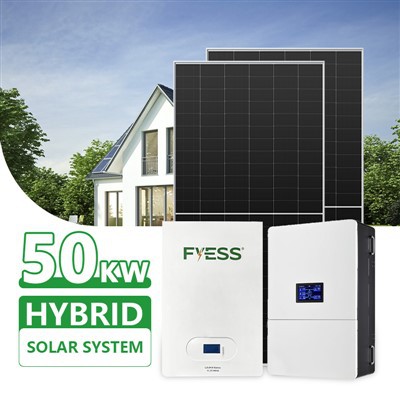
As a supplier of Solar System On Grid, I often get asked about the energy yield of these systems. It's a crucial question, especially for those looking to make the switch to solar energy. In this blog, I'll break down what affects the energy yield of a solar system on grid and how you can maximize it.
How Does a Solar System On Grid Work?
First off, let's quickly go over how a Solar System On Grid works. These systems are connected to the local electricity grid. Solar panels on your roof capture sunlight and convert it into direct current (DC) electricity. An inverter then turns this DC power into alternating current (AC), which is what your home appliances use. Any excess electricity produced by your solar panels can be sent back to the grid.
What Affects the Energy Yield?
- Solar Panel Efficiency: The efficiency of solar panels plays a huge role. Higher - efficiency panels can convert more sunlight into electricity. For example, premium panels might have an efficiency rating of around 20% - 22%, while standard ones could be around 15% - 17%. This means that for the same amount of sunlight, a higher - efficiency panel will produce more electricity.
- Sunlight Exposure: This is a no - brainer. The more sunlight your solar panels get, the more electricity they'll generate. The geographical location of your home is important here. Areas closer to the equator generally get more sunlight throughout the year. Also, the orientation and tilt of your panels matter. Panels facing south (in the northern hemisphere) or north (in the southern hemisphere) tend to receive the most sunlight.
- Weather Conditions: Cloudy days, rain, and snow can all reduce the amount of sunlight reaching your panels. In regions with a lot of overcast weather, the energy yield will be lower compared to sunny areas. However, modern solar panels can still generate some electricity even on cloudy days.
- Panel Degradation: Over time, solar panels degrade. On average, panels lose about 0.5% - 1% of their efficiency per year. So, after 25 years, a panel that was originally 20% efficient might be around 15% - 17.5% efficient.
Calculating the Energy Yield
To get an idea of the energy yield of a Solar System for Home On Grid, you can use some simple calculations. First, you need to know the wattage of your solar panels. Let's say you have a system with 20 panels, each rated at 300 watts. So, the total system capacity is 20 x 300 = 6000 watts or 6 kilowatts (kW).


Next, you need to consider the peak sun hours in your area. Peak sun hours are the number of hours per day when the sunlight is strong enough to produce the maximum power output of your panels. For example, if your area has 5 peak sun hours per day, a 6 - kW system could theoretically produce 6 kW x 5 hours = 30 kilowatt - hours (kWh) of electricity per day.
However, this is just a rough estimate. You need to account for factors like panel inefficiencies, shading, and weather. A more realistic estimate might be around 70% - 80% of the theoretical output. So, in our example, the actual daily energy yield could be around 21 - 24 kWh.
Maximizing the Energy Yield
- Proper Installation: Make sure your panels are installed at the correct angle and orientation for your location. A professional installer can help you with this. Also, ensure that there are no obstructions like trees or buildings that could shade your panels.
- Regular Maintenance: Keep your panels clean. Dust, dirt, and bird droppings can reduce the amount of sunlight reaching the panels. You can clean them with a soft brush and some water. Also, have your system checked regularly by a professional to ensure that all components are working properly.
- Use Energy - Efficient Appliances: By using energy - efficient appliances in your home, you can reduce the amount of electricity you need from the grid. This means that more of the electricity produced by your solar panels can be used effectively.
Benefits of a High Energy Yield
- Lower Electricity Bills: The more electricity your solar system produces, the less you'll need to buy from the grid. This can lead to significant savings on your electricity bills over time.
- Return on Investment: A high - yielding solar system will pay for itself faster. You'll start seeing a return on your investment sooner, making the switch to solar energy more financially viable.
- Environmental Impact: By generating more clean energy, you're reducing your carbon footprint. This is great for the environment and helps in the fight against climate change.
Why Choose Our Solar System On Grid?
As a supplier, we offer high - quality On Grid Solar Power System that are designed to maximize energy yield. Our panels are made from the latest technology, ensuring high efficiency and long - term performance. We also provide professional installation and maintenance services to make sure your system is always running at its best.
If you're interested in learning more about our solar systems or want to get a quote for your home, we'd love to hear from you. Contact us today to start your journey towards clean, renewable energy. Making the switch to solar has never been easier, and with our high - yielding systems, you can enjoy the benefits of solar power for years to come.
References
- "Solar Energy Fundamentals." National Renewable Energy Laboratory.
- "Understanding Solar Panel Efficiency." Solar Power World.