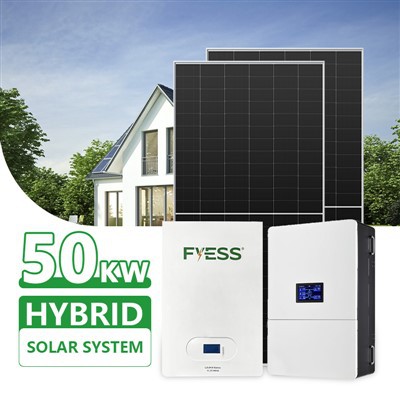
As a trusted supplier of on-grid solar inverters, I understand the critical importance of safety features in these devices. On-grid solar inverters play a pivotal role in converting direct current (DC) generated by solar panels into alternating current (AC) that can be fed into the electrical grid. Ensuring the safety of these inverters is not only essential for the protection of the equipment but also for the well - being of the users and the stability of the electrical grid. In this blog, I will discuss the key safety features that an on - grid solar inverter should have.
Over - voltage and Under - voltage Protection
One of the fundamental safety features of an on - grid solar inverter is over - voltage and under - voltage protection. Solar power systems are subject to fluctuations in voltage due to various factors such as changes in sunlight intensity, grid conditions, and the performance of other components in the system. An over - voltage situation can cause damage to the inverter's internal components, leading to costly repairs or even complete failure of the device. On the other hand, under - voltage can result in inefficient operation and may also cause the inverter to shut down unexpectedly.
Our on - grid solar inverters are equipped with advanced over - voltage and under - voltage protection mechanisms. These mechanisms continuously monitor the input and output voltages of the inverter. If the voltage exceeds or falls below the pre - set safe limits, the inverter will automatically shut down to prevent any damage. This not only protects the inverter but also helps to maintain the stability of the overall solar power system. For example, in regions with unstable grid voltages, our inverters can effectively safeguard against voltage spikes and dips, ensuring reliable operation.
Over - current Protection
Over - current is another significant risk in on - grid solar inverters. Excessive current can be caused by short - circuits, faulty wiring, or an overload on the system. When an over - current situation occurs, it can generate excessive heat, which may lead to component damage, electrical fires, or other safety hazards.
To address this issue, our on - grid solar inverters are designed with over - current protection features. The inverters are equipped with current sensors that continuously monitor the current flowing through the device. If the current exceeds a safe threshold, the inverter will immediately reduce the output power or shut down completely. This rapid response helps to prevent any potential damage to the inverter and the connected electrical system. For instance, in case of a short - circuit in the solar panel array, the over - current protection will kick in to protect the inverter from being damaged by the high - current surge.
Islanding Protection
Islanding is a dangerous situation that can occur in on - grid solar power systems. It happens when the grid power is interrupted, but the solar inverter continues to supply power to a section of the grid, creating an “island” of electricity. This can pose a serious risk to utility workers who may assume that the power is off when working on the grid. It can also cause damage to the inverter and other equipment due to unstable grid conditions.
Our on - grid solar inverters are equipped with reliable islanding protection mechanisms. These mechanisms continuously monitor the grid frequency, voltage, and phase. If the grid power is lost, the inverter will quickly detect the change and shut down within a very short period, typically within a few milliseconds. This ensures that the solar power system does not continue to supply power to the grid during an outage, protecting both the utility workers and the equipment. For example, in the event of a power grid maintenance or a natural disaster that causes a grid outage, our inverters will immediately stop feeding power into the grid to prevent islanding.
Temperature Protection
Temperature is a crucial factor that can affect the performance and lifespan of an on - grid solar inverter. High temperatures can cause the internal components of the inverter to overheat, leading to reduced efficiency, component degradation, and even premature failure.
Our on - grid solar inverters are designed with effective temperature protection features. The inverters are equipped with temperature sensors that monitor the internal temperature of the device. If the temperature rises above a safe level, the inverter will automatically adjust its operation to reduce the heat generation. This may involve reducing the output power or increasing the cooling fan speed. In extreme cases, if the temperature continues to rise, the inverter will shut down to prevent any damage. For example, in hot climates or during periods of high sunlight intensity, the temperature protection feature ensures that the inverter operates within a safe temperature range, prolonging its lifespan and maintaining its performance.
Ground Fault Protection
Ground faults can occur in on - grid solar power systems when there is an unintended electrical connection between the electrical circuit and the ground. This can be caused by damaged insulation, faulty wiring, or other electrical problems. Ground faults can pose a serious risk of electric shock to users and can also cause damage to the inverter and other equipment.
Our on - grid solar inverters are equipped with ground fault protection features. These features continuously monitor the electrical current flowing between the inverter and the ground. If a ground fault is detected, the inverter will immediately shut down to prevent any further electrical leakage. This helps to protect the users from electric shock and ensures the safety of the entire solar power system. For instance, if there is a damaged wire in the solar panel array that causes a ground fault, the ground fault protection will quickly detect the problem and shut down the inverter to prevent any potential harm.
Surge Protection
Surges in the electrical grid can be caused by lightning strikes, utility switching, or other external factors. These surges can generate high - voltage spikes that can damage the on - grid solar inverter and other connected equipment.
Our on - grid solar inverters are designed with surge protection features. These features are typically in the form of surge arresters or transient voltage suppressors. The surge protection devices are installed at the input and output of the inverter to divert the excess voltage caused by surges away from the inverter. This helps to protect the inverter from damage and ensures its reliable operation. For example, in areas prone to lightning strikes, the surge protection feature provides an additional layer of protection for the inverter, reducing the risk of damage from lightning - induced surges.
Reverse Polarity Protection
Reverse polarity can occur when the solar panels are incorrectly connected to the inverter. This can cause damage to the inverter's internal components and may also lead to safety hazards.


Our on - grid solar inverters are equipped with reverse polarity protection features. These features can detect when the solar panels are connected with the wrong polarity and prevent the inverter from operating until the correct connection is made. This simple yet effective protection mechanism helps to prevent any damage to the inverter due to incorrect wiring, ensuring the safety and proper operation of the solar power system.
Communication and Monitoring Safety
In modern on - grid solar inverters, communication and monitoring systems are becoming increasingly important. These systems allow users to remotely monitor the performance of the inverter and the solar power system. However, they also introduce potential security risks, such as unauthorized access and data breaches.
Our on - grid solar inverters are designed with robust communication and monitoring safety features. We use encrypted communication protocols to ensure that the data transmitted between the inverter and the monitoring system is secure. Additionally, we implement user authentication mechanisms to prevent unauthorized access to the monitoring system. This helps to protect the user's privacy and the integrity of the solar power system data.
Conclusion
In conclusion, on - grid solar inverters should be equipped with a comprehensive set of safety features to ensure the protection of the equipment, the users, and the electrical grid. At our company, we are committed to providing high - quality on - grid solar inverters that incorporate all the essential safety features discussed above. Whether you are looking for a On Grid Single Phase Solar Inverter, a On Grid Three Phase Solar Inverter, or a On Grid Split Phase Solar Inverter, our products are designed to meet the highest safety standards.
If you are interested in purchasing our on - grid solar inverters or have any questions about our products, please feel free to contact us for procurement and negotiation. We look forward to working with you to build a safe and efficient solar power system.
References
- “Solar Inverter Safety Standards and Guidelines,” International Electrotechnical Commission (IEC).
- “Safety Considerations for Grid - Connected Photovoltaic Systems,” National Renewable Energy Laboratory (NREL).
- “Best Practices for Solar Inverter Safety,” Solar Energy Industries Association (SEIA).