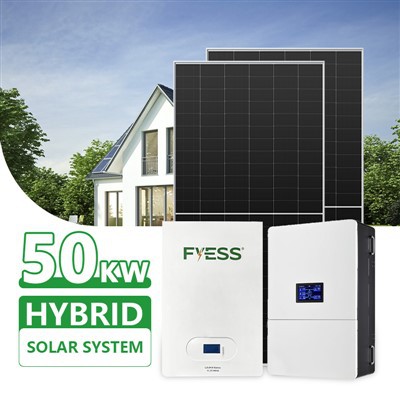
Figuring out the right size of an off-grid solar inverter can be a real head-scratcher. But don't worry, I'm here to break it down for you. As an off-grid solar inverter supplier, I've seen all sorts of situations and can help you make the best choice.
First off, let's understand what an off-grid solar inverter does. It's a crucial component in an off-grid solar power system. Its job is to convert the direct current (DC) electricity produced by your solar panels into alternating current (AC) electricity that you can use to power your appliances and devices.
So, how do you determine the size you need? Well, it all boils down to your power needs. You've got to figure out how much electricity you're going to use on a daily basis. Start by making a list of all the electrical appliances and devices you plan to run on your off-grid system. Include things like lights, refrigerators, TVs, computers, and any other gadgets you use regularly.
Once you've got your list, find out the power rating of each item. This is usually measured in watts and can be found on the appliance itself or in the user manual. Add up the wattage of all the devices you want to run simultaneously. This total wattage gives you an idea of the minimum size of the inverter you'll need.
For example, let's say you have a refrigerator that uses 200 watts, a few lights that add up to 50 watts, and a TV that uses 100 watts. If you want to run all these at the same time, you'll need an inverter that can handle at least 350 watts (200 + 50 + 100).
But it's not just about the running wattage. Some appliances, like motors and compressors, require a higher amount of power to start up. This is called the surge wattage. You need to take this into account when choosing an inverter. A good rule of thumb is to look for an inverter that can handle at least 2 - 3 times the surge wattage of your largest appliance.
Let's say your refrigerator has a surge wattage of 600 watts. In this case, you'd want an inverter that can handle at least 600 watts or more to ensure it can start the refrigerator without any issues.
Another factor to consider is the type of inverter. There are two main types for off-grid systems: single-phase and split-phase.
A Off Grid Single Phase Solar Inverter is suitable for smaller off-grid setups. It's great for powering basic household appliances and small electronics. If you have a small cabin or a simple off-grid home, a single-phase inverter might be all you need.
On the other hand, a Off Grid Split Phase Solar Inverter is more powerful and can handle larger loads. It's often used in bigger off-grid homes or commercial setups where you have multiple high-power appliances running at the same time.
When it comes to sizing, you also need to think about future expansion. If you plan to add more appliances or devices to your off-grid system in the future, it's a good idea to choose an inverter that has some extra capacity. This way, you won't have to replace the inverter when you upgrade your system.
Now, let's talk about efficiency. A more efficient inverter will convert more of the DC power from your solar panels into usable AC power. This means you'll get more out of your solar energy and save on costs in the long run. Look for inverters with high efficiency ratings.
You should also consider the quality and reliability of the inverter. A good quality inverter will last longer and require less maintenance. As a supplier, I can tell you that investing in a high-quality inverter is definitely worth it.
To sum it up, here are the steps to figure out the right size off-grid solar inverter:
- Make a list of all the electrical appliances and devices you want to run.
- Find the power rating (wattage) of each item.
- Add up the wattage of all the devices you want to run simultaneously.
- Consider the surge wattage of your appliances, especially those with motors or compressors.
- Decide between a single-phase or split-phase inverter based on your power needs.
- Think about future expansion and choose an inverter with some extra capacity.
- Look for an inverter with high efficiency and good quality.
If you're still not sure which size off-grid solar inverter is right for you, don't hesitate to reach out. As a supplier, I'm here to help you make the best decision for your off-grid system. Whether you have a small setup or a large commercial project, we've got the right inverter for you. Contact us to start the conversation and let's find the perfect solution for your power needs.


References:
- General knowledge of off-grid solar power systems from industry experience.