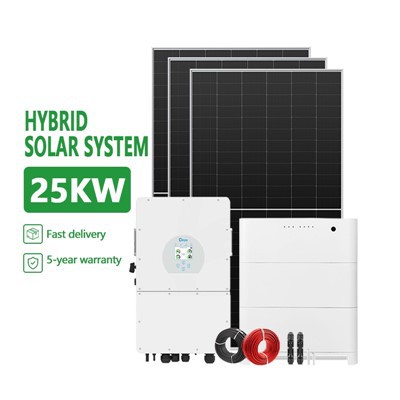
If you’ve ever found yourself in a remote cabin, an off-grid construction site, or a tiny home tucked away from power lines, you know how critical it is to have a reliable energy source that doesn’t depend on utility grids. For years, solar panels alone weren’t enough to power everything from refrigerators to phone chargers—they produced direct current (DC) power, and most of the devices we use run on alternating current (AC). That’s where an off grid solar inverter comes in, the unsung hero of off-grid energy systems. As a supplier who’s worked with these systems for years, I’ve seen firsthand how the right inverter can make or break an off-grid setup, and I’m here to break down exactly what it is, how it works, and why it matters so much for anyone going off the grid.


Let’s start with the basics: what is an off grid solar inverter, and how is it different from other types of inverters? If you’re familiar with grid-tied inverters, their main job is to convert DC power from solar panels to AC power for home use, and they often have to sync with the utility grid’s frequency and voltage to work properly. Off grid solar inverters, though, don’t connect to a utility grid at all—they’re designed to work in standalone systems that rely entirely on solar panels, batteries, and sometimes backup generators. That means they have to handle more tasks than just conversion: they also regulate power flow between the solar panels, batteries, and your home’s appliances, make sure the battery bank isn’t overcharged or drained too low, and keep your AC power stable even when sunlight levels fluctuate.
Think of it this way: your solar panels are like a hose that carries water (DC power) from the sun to your system. A battery is like a tank that stores that water for when you need it at night or on cloudy days. The inverter is the pump that converts that stored water into the pressure you need to run your taps, shower, and other fixtures (your AC-powered appliances). Without the right pump, you either get too little pressure, too much, or no flow at all—and the same goes for your off-grid system.
Now, let’s get into the core functions of an off grid solar inverter, because it’s not just about DC to AC conversion. First and foremost, it manages the charge from your solar panels to your battery bank. On a sunny day, your panels will produce more power than you’re using, and that excess has to go into the batteries. A good off grid inverter will control the rate at which that power is added, preventing overcharging which can shorten a battery’s lifespan. If you’ve ever had a phone battery that dies faster after a year, you know overcharging is no small thing—for off-grid systems, batteries can cost thousands of dollars, so protecting them is non-negotiable.
Then there’s the battery discharge management. At night or on cloudy days, when your panels aren’t producing enough power, the inverter draws from the batteries. It has to make sure the batteries don’t drain too low, because deep discharging can also damage them. Most inverters let you set a minimum battery voltage threshold, so if the batteries get too low, the inverter will shut off non-essential appliances (like your TV or space heater) to save power for critical items like your refrigerator. That’s a lifesaver when you’re in a remote spot and can’t easily recharge your batteries.
Another key function is providing stable AC power. Appliances like refrigerators, microwaves, and laptops need a consistent voltage and frequency to work properly. Solar panels can produce variable power depending on sunlight, and batteries can also fluctuate as they charge and discharge. A quality off grid inverter will clean up that power, delivering a smooth, consistent AC output that’s safe for all your devices. I’ve heard horror stories from customers who tried to cut corners with a cheap inverter—their microwaves burned out, their laptops had screen issues, and even their refrigerators stopped working. A good inverter is an investment that protects all your other gear.
When you’re picking an off grid solar inverter, one of the first choices you’ll face is the type of output: single phase or split phase. Let’s talk about single phase first, because it’s the most common for smaller off-grid setups, like cabins or tiny homes. A single phase inverter delivers AC power through one wire, and it’s ideal for powering basic appliances: lights, phones, small refrigerators, and TVs. If you’re just starting out with off-grid living, or your energy needs are modest, a single phase inverter is probably the right fit. For example, a 2kW single-phase off-grid inverter with a rated battery voltage of 12VDC is perfect for small cabins or tiny homes with light energy use. That inverter can handle up to 2000 watts of continuous power, which is enough to run most small appliances without breaking the bank. If you want to check out that specific model, you can look at the 2kW Single-phase Off-grid Inverter With A Rated Battery Voltage Of 12VDC.
On the other end of the spectrum, if you’re running a larger off-grid system—like a full-size home, a small farm, or a remote business—you’ll probably need a split phase inverter. Split phase inverters deliver two separate AC outputs at 180 degrees out of phase, which gives you two 120V legs and a combined 240V output. That’s essential for powering high-wattage appliances like electric stoves, water heaters, air conditioners, or well pumps. These systems can handle much more power, so they’re built for bigger energy demands. If you’re looking for a split phase option, take a look at the Off Grid Split Phase Solar Inverter, which is designed for larger off-grid setups that need to power multiple high-wattage devices. No matter which type you choose, it’s crucial to match the inverter’s capacity to your total energy needs—don’t buy an inverter that’s too small, or you’ll be stuck with constant power shortages.
Another important feature to consider is whether your off grid solar inverter has a built-in charger for backup generators. Many off-grid systems use a generator as a backup on days when there’s not enough sunlight, like during a week of rain. A good inverter will have a transfer switch that automatically switches from solar power to generator power when the battery gets too low, and vice versa when solar is available again. That automation takes the stress out of managing power in bad weather, so you don’t have to get up in the middle of the night to flip a switch.
Battery compatibility is also a big one. Most people today are moving away from old lead-acid batteries to lithium-ion batteries, which are more efficient, last longer, and can handle more charge/discharge cycles. But not all inverters work with all battery types. Some inverters are specifically designed for lithium-ion, while others work with lead-acid, or even both. When you’re planning your system, make sure your inverter is compatible with the batteries you choose—mixing incompatible parts can lead to poor performance or even damage your batteries.
I’ve worked with hundreds of off-grid customers over the years, and the biggest mistake I see people make is underestimating their energy needs. They buy a small inverter because it’s cheaper, then realize they can’t run their microwave and space heater at the same time on a cold winter night. It’s always better to size your inverter for your peak power needs, not just your average use. Add up the wattage of all the devices you run at the same time, then add 20-30% extra to account for surges (like when your fridge compressor kicks on, which uses more power at start-up). That extra buffer will give you peace of mind and prevent you from being stuck with insufficient power.
Let’s talk about a real example. Last year, I worked with a customer who had a small cabin in the Rocky Mountains. He started with a basic single phase off grid solar inverter, but he kept running into issues when he tried to use his space heater and coffee maker at the same time. Once he realized his inverter was only 1.5kW—just enough for his lights and fridge—he upgraded to an off grid single phase solar inverter with a higher capacity, which let him run all his essential appliances without any issues. The key was matching the inverter to his actual needs, not what he thought he needed when he first started.
Maintenance is another thing to keep in mind. Off grid solar inverters are durable, but they do need occasional checks to make sure they’re working properly. You should keep them clean, check the connections regularly to make sure they’re tight, and monitor their performance (many modern inverters have an app that lets you track how much power they’re producing, the battery level, and any issues). If something does go wrong, having a local technician who knows off grid systems is helpful, but many modern inverters are designed to be user-friendly, so you can troubleshoot small issues on your own.
If you’re thinking about going off the grid, whether it’s a tiny home, a cabin, or a full-size property, the off grid solar inverter is the heart of your system. It’s the part that turns sunlight into usable power, protects your batteries, and ensures you have consistent energy no matter where you are. From small single phase setups for modest needs to larger split phase systems for bigger energy demands, there’s an inverter out there that’s right for you.
Don’t make the mistake of skimping on this critical component—invest in a high-quality inverter that’s sized for your needs, and it will pay off for years to come. If you’re ready to explore your options, whether you’re looking for a compact solution or a larger system, I’m here to help you find the right off grid solar inverter for your setup. Get in touch to start your off-grid journey with confidence, knowing you have a reliable power source that works as hard as you do.
References
- Off-grid Solar Inverters: Functionality and Applications for Standalone Energy Systems, International Renewable Energy Agency (IRENA), 2022
- Lithium-ion Battery Compatibility for Off-grid Solar Systems, Solar Energy Industries Association (SEIA), 2023
- Sizing Guidelines for Off-grid Inverter Systems, National Renewable Energy Laboratory (NREL), 2021