If you’ve ever stood around an EV charging station watching people grumble about how long their car takes to top up, you’ve probably thought the same thing I have: “Why can’t we just make batteries charge faster?” As a BMS supplier, I get asked this all the time—usually after someone tests our products and realizes that a good battery management system isn’t just for keeping batteries safe. It’s the secret sauce behind fast charging that doesn’t turn your battery into a ticking time bomb. Let’s break down how that works, no jargon overload, promise.
First, let’s get one thing straight: fast charging isn’t just shoving as much power into a battery as possible. Lithium-ion batteries (and LFP, if you’re into that) hate being charged too hard too fast—think of it like chugging a whole water bottle in 2 seconds vs. sipping it slowly. If you push too much current in too quickly, you get lithium plating—little metal crystals forming on the anode that can chew through separators, cause short circuits, or kill your battery life in months. That’s where the BMS steps in. It’s like the middleman between the charger and the battery, constantly checking every little thing and adjusting the flow before anything goes wrong.
Let’s talk real numbers here. Most cheap chargers just send a fixed current, but a smart BMS? It monitors individual cell voltage, temperature, and state of charge (SoC) every millisecond. When you start a fast charge, say at a public charging station for an EV, the BMS will first check if every cell is within the safe voltage range (for LFP, that’s roughly 2.5V to 3.65V per cell—don’t quote me on that, our team fine-tunes it) and at the right temperature. If a cell is a little too cold, it’ll throttle the charger’s current instead of cranking it up—because cold batteries can’t absorb power without plating. That’s why you notice EV fast charging is slow at first when it’s freezing outside; the BMS is warming the battery (either via heating elements or drawing a little power to warm cells) so it can take more current later.
Now, not all BMS are built the same. We’ve got models for every scenario, from small solar setups to big home storage systems. If you’re running a off-grid solar setup, our 50A Solar Battery BMS is designed to manage fast charging for smaller battery banks, making sure the solar panels push as much power as possible without overloading the cells. For bigger home storage that needs to charge quick, like if you’re storing grid power during off-peak hours, our 150A Lfp Battery BMS is built to handle higher currents safely. We also have options for even higher loads: if you’ve got a home system that needs to charge from a generator or grid fast, our 200A Lithium Battery BMS and 100A Storage Battery BMS are tested to keep currents steady while monitoring for any cell inconsistencies. And for the biggest home setups, our 300A Home Battery BMS can handle really high charging rates, so you never have to wait around for your storage to top up.
Here’s the part most people don’t think about: cell balancing during fast charging. If one cell in a battery pack is a little weaker than the rest (like, say, it’s at 95% SoC and another is at 85%), shoving a bunch of current in fast will make the weaker cell overheat or go over voltage before the others. A good BMS does active cell balancing, not just passive. Passive balancing is old news—you just bleed off power from full cells, which wastes energy. Active balancing takes power from full cells and sends it to weaker ones during charging, so all cells stay matched. That means the pack can take higher overall current without any cell going out of whack. It’s like making sure everyone in a group hike is going the same speed instead of holding everyone up for the slowest person.
Temperature control is another big one. I can’t tell you how many customers come to us saying their old BMS fried their battery because it didn’t watch the temp. When you charge fast, batteries generate a lot of heat. If that heat isn’t spread out, some cells get way hotter than others. Hot cells degrade faster, period. A smart BMS will trigger fans (or even liquid cooling, for bigger systems) when temp hits a threshold, and if it gets too high, it’ll back off the charging current until the battery cools down. It’s a balancing act—you want to charge as fast as possible, but not at the cost of the battery’s long life.
Let’s throw in a real-world example. Last year, we worked with a small electric delivery van company that was frustrated with slow charging times cutting into their routes. Their old BMS let them charge at 50A max, so a full charge took 2 hours. We swapped in our 100A Storage Battery BMS, and overnight they were charging at 100A without any issues. The BMS adjusted current based on cell temp and balancing, so even on hot summer days, the battery didn’t overheat. Their charge time dropped to 45 minutes, and they reported zero battery degradation after 6 months. That’s the payoff of a BMS built for fast charging, not just basic monitoring.
Wait, but what about fast charging vs. battery life? A lot of folks think charging fast is bad for your battery, and it can be if the BMS is garbage. But with a properly calibrated BMS, you can charge at 80% of max current without killing the battery. Our team tests every BMS model at charging rates way higher than the rated specs, simulating years of fast charges, to make sure it can hold up. The key is that the BMS isn’t just reacting to problems—it’s predicting them. It uses algorithms that learn how your battery performs over time, so as cells age and their capacity changes, the BMS adjusts charging rates to keep them safe.
Let’s get into the tech stuff a little (but keep it light, I promise). Modern BMS use state-of-the-art models for SoC, state of health (SoH), and internal resistance. They calculate how much current the battery can safely take right now, not just what the charger is sending. That means when you plug in, the BMS negotiates with the charger—like, “Hey, I can handle 120A right now, but only if you keep the cell temp at 25C” instead of just taking whatever the charger gives. It’s a two-way conversation, not a one-way street. Some people call this “smart charging negotiation,” and it’s why Tesla Superchargers work so well—their BMS is basically a pro at this back-and-forth.
Now, not all applications are the same. For a small solar setup with a few lithium cells, our 50A Solar Battery BMS is perfect because it’s compact, affordable, and has enough processing power to handle fast charging for small packs. For a whole-home solar + storage system that charges from the grid during off-peak hours, our 300A Home Battery BMS is designed for high currents and can monitor up to 16 cells (or more, if you need it) to keep everything in line. We test all our BMS with LFP, NMC, and other chemistries, so no matter what kind of battery you’re using, our products will adjust to keep fast charging safe.
I should also mention safety—because fast charging can be risky if things go wrong. Overvoltage, overcurrent, short circuits, thermal runaway—all these are real concerns when you’re shoving power around. A good BMS has multiple layers of protection, not just one sensor. It’ll cut power immediately if a cell goes over voltage, if temp spikes, or if current exceeds the limit for more than a split second. Our BMS are UL-listed and go through rigorous testing to make sure they don’t fail when you need them most. That’s non-negotiable for us.
Here’s a common mistake we see: people buying a cheap off-brand BMS because it’s cheaper, then wondering why their fast charging only works for a month. Those BMS use basic sensors and outdated algorithms, so they can’t adjust to real-time conditions. They might even send too much current because they don’t monitor individual cells. Our team designs BMS with high-precision sensors (down to millivolts and tenths of a degree) so you get accurate data every time. We also offer customization—if you have a specific application, like a marine battery bank that needs fast charging, we can tweak the BMS settings to fit your needs.

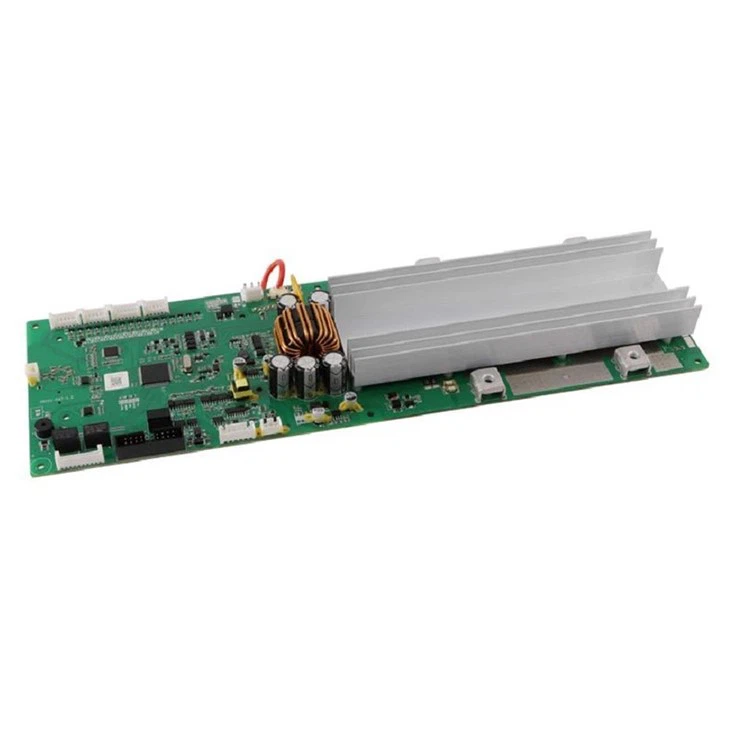
So, to wrap this up, a BMS doesn’t just “manage” a battery—it enables fast charging by acting as the brain that keeps everything safe and efficient. It negotiates with the charger, balances cells, regulates temperature, and protects against damage, all without you having to lift a finger. The right BMS can cut your charging time in half or more, while keeping your battery running for thousands of cycles.
If you’re tired of waiting for your battery to charge, or you’re looking to upgrade your system to support fast charging, we’ve got the BMS for you. Whether you’re working on a small solar project, a home storage system, or an EV conversion, our team can help you pick the right model: from our compact 50A Solar Battery BMS to our high-powered 300A Home Battery BMS. We test every product in real-world conditions, so you don’t have to worry about surprises. Reach out to us to chat through your needs and find the perfect BMS for your fast charging setup. Don’t let slow charging hold you back—let a smart BMS do the work so you can get back to what matters.
References:
- lithium-ion Battery Fast Charging: Mechanisms, Challenges, and Strategies, Journal of The Electrochemical Society, 2021
- Battery Management System Functions for Fast Charging Applications, IEEE Transactions on Power Electronics, 2020
- LFP Battery Cell Balancing Methods for Fast Charging, Journal of Power Sources, 2022
- Thermal Management for High-Rate Charging of Lithium-Ion Batteries, Applied Energy, 2019
- State-of-Health Estimation and Adaptive Charging Algorithms for Lithium-Ion Batteries, IEEE Transactions on Industrial Informatics, 2023