If you’ve ever spent time in a hospital—whether as a patient, a visitor, or a vendor—you know one thing above all else: reliability is non-negotiable. From the MRI machines that detect early-stage disease to the ventilators that keep critically ill patients alive, every piece of life-saving equipment depends on a constant, stable power supply. That’s why, when a potential client recently asked me, “Can a 10kw hybrid solar system work for a small hospital or clinic?” I didn’t give a quick yes or no. Instead, I walked through the science of how our systems work, the unique needs of healthcare facilities, and the practical realities of powering a space where downtime isn’t just inconvenient—it’s dangerous.
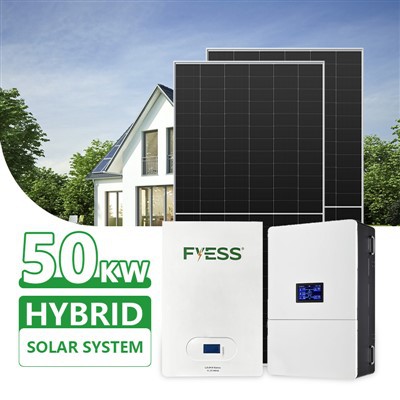
Let’s start with the basics: a 10kw hybrid solar system is designed to produce 10 kilowatts of alternating current (AC) power from sunlight, with a hybrid inverter that lets it switch between solar, grid, and stored battery power seamlessly. It’s not the largest system we offer, but it’s one of the most versatile for smaller, low-footprint energy needs. You can learn more about how these systems are engineered to balance solar production, storage, and grid compatibility by checking out our 10kw Hybrid Solar System page, which breaks down real-world installation cases and technical specs. But before we dive into whether it fits a hospital, we need to talk about what makes a hospital’s power profile different from a home or a retail store.
Hospitals have two types of power loads: critical and non-critical. Critical loads are the ones you can’t afford to lose—things like emergency lighting, cardiac monitors, life support equipment, and refrigeration for vaccines and blood products. Non-critical loads include office computers, waiting room lights, breakroom appliances, and administrative tools. For a small community clinic or a small rural hospital with 20–30 beds, the total daily energy use is usually between 200–400 kWh (kilowatt-hours), depending on operating hours and equipment. Let’s do the math: a 10kw hybrid system, under ideal sunlight conditions (about 5 hours of peak sun a day), would produce roughly 50 kWh of solar power. That’s not enough to cover the full 200–400 kWh daily load of a typical hospital. Wait—so does that mean a 10kw system is useless for healthcare settings? Not necessarily. The key here is to pair it with energy storage and smart load management, which is where hybrid systems shine.


Hybrid solar systems aren’t just about generating power—they’re about optimizing when you use that power. The hybrid inverter acts as a central hub, monitoring solar production, grid voltage, and battery charge levels in real time to automatically shift power sources. For healthcare facilities, this means two big benefits: reducing dependency on the grid (and lowering energy costs) and adding a layer of backup power for critical loads. Let’s say a small clinic has a dedicated circuit for critical loads, which uses about 30–50 kWh per day. A 10kw solar system, paired with a battery storage system (we offer options ranging from our smaller commercial setups to higher-capacity units), can cover that entire critical load during daylight hours, and the stored battery power can kick in to back those loads up if the grid goes down. That’s a game-changer for places that can’t afford power outages.
But here’s where it’s important to talk about sizing and system design. A 10kw hybrid system on its own isn’t going to power every part of a 100-bed hospital with an emergency room and surgical suites. For larger healthcare facilities, a modular approach works better. We often pair 10kw systems with higher-capacity energy storage and expand the system as needed. For example, if a small clinic’s total load is 300 kWh per day, we might install a 10kw solar array, a 50kWh battery storage system (you can read about our commercial peak-shaving solutions here: 50kW High-power Energy Storage System – Commercial & Industrial Peak Shaving Solution), and add two more 10kw systems down the line if the clinic expands. This modular design lets healthcare facilities scale their energy solution as their needs grow, without a massive upfront investment.
Another factor to consider is voltage compatibility. Most hospital facilities run on three-phase power, which delivers electricity more efficiently for large, high-demand equipment like X-ray machines or HVAC systems. Not all hybrid inverters are designed for three-phase use, so choosing the right inverter is critical for seamless integration. Our Three Phase Hybrid Inverter Selection Guide walks through how to match inverter capacity to your system’s load, how to handle voltage fluctuations, and how to ensure compatibility with existing hospital electrical panels. For healthcare settings, a three-phase hybrid inverter also supports better integration with our high-voltage hybrid systems, which are designed to handle deeper discharges and longer backup times—something vital for critical loads. Our High-voltage Hybrid System page explains how these systems can store more energy in less space, which is a huge plus for hospitals with limited rooftop or ground space for solar panels.
Wait, but what about when the sun isn’t shining? That’s where energy storage and grid connectivity come in. Hybrid systems can pull power from the grid during low sunlight or high demand, but they also use stored battery power to cover gaps. For small hospitals, the biggest risk isn’t a full day without sun—it’s a short grid outage. A 10kw hybrid system paired with a battery backup can keep critical loads running for 4–8 hours during an outage, which is usually enough time for emergency generators to kick in (or for grid power to be restored). For longer outages, we can work with clients to add higher-capacity energy storage, like our 125kw High-power Energy Storage System, which is designed for larger commercial and industrial facilities that need extended backup power for critical operations.
I recently worked with a 25-bed rural clinic in Ohio that was dealing with monthly grid power costs of $1,800 and an average of 3–4 grid outages per year, some lasting up to 6 hours. The clinic couldn’t afford to install a full 50kw solar system, and their rooftop only had space for 30 solar panels (which works out to roughly 10kw of capacity). We designed a system using our 10kw hybrid setup, paired with a 60kWh battery storage system. Here’s how it worked: during daylight hours, the system powers all of the clinic’s non-critical loads (like waiting room lights and office computers) first, then sends excess power to charge the batteries for critical loads. On average, the clinic now covers 70% of its critical load with solar and battery power during the day, and uses stored battery power to run critical equipment during outages. Their monthly grid costs dropped to $520, and they haven’t had any downtime for critical equipment since installation last year. That’s a real-world example of how a 10kw hybrid system works for a healthcare facility—when designed correctly for their specific load and space constraints.
Of course, there are limitations. A 10kw hybrid system can’t power a full hospital’s entire load, especially larger ones with emergency rooms, operating rooms, and multiple stories. But for small, rural clinics, urgent care centers, or standalone medical offices, it’s more than enough to reduce energy costs and provide reliable backup for life-saving equipment. The key is working with a supplier that understands both solar technology and the unique power needs of healthcare facilities. Not all solar vendors know the difference between critical and non-critical loads, or how to design a system that will comply with healthcare industry power regulations. At our company, we’ve spent years working with clinics and small hospitals to customize hybrid systems that meet their exact needs, and we always start with a full energy audit to map out their loads, operating hours, and space constraints.
Another consideration for healthcare facilities is durability and uptime. Hospital electrical systems run 24/7, 365 days a year, so the hybrid solar system can’t be prone to downtime. Our hybrid inverters are built with redundant components, so if one part fails, the system automatically switches to another mode without interrupting power. We also offer 24/7 monitoring for all our systems, so clinic staff can track solar production, battery levels, and power loads from a simple app, and we can catch any issues before they cause problems. For a hospital, that peace of mind is worth more than any cost savings.
When someone asks me again if a 10kw hybrid solar system can be used in a hospital, my answer is now: “Not a full-size hospital, but for small clinics, urgent cares, and rural medical centers—absolutely, when paired with the right energy storage and smart load management.” The science checks out: hybrid systems seamlessly integrate solar, storage, and grid power to cover critical loads, reduce costs, and add backup reliability. The real-world example from that Ohio clinic proves it works. If you’re a healthcare facility manager or administrator looking to reduce energy costs and improve power reliability, the first step is to talk to a supplier that knows both solar technology and healthcare power needs. We’re here to walk you through every step, from energy audits to system design, and help you find a solution that fits your space, your budget, and your patients’ needs. Reach out to start a conversation about customizing a hybrid solar system for your facility.
References
- International Energy Agency. (2022). Solar Photovoltaic Power for Commercial and Industrial Applications. IEA Publications.
- American Hospital Association. (2021). Energy Resilience in Healthcare Facilities: Best Practices for Power Systems. AHA Press.
- Solar Energy Industries Association. (2023). Hybrid Solar System Performance and Sizing Guidelines for Small Commercial Facilities. SEIA Technical Report.
- National Fire Protection Association. (2022). NFPA 99: Health Care Facilities Code. National Fire Protection Association.