Hey there! If you’ve been thinking about switching to solar, you’ve probably heard the term “on grid solar system” thrown around. But if you’re new to the game, it can feel like there’s a whole lot of jargon to sort through—especially when you’re trying to figure out what kind of setup works best for your home or business. As someone who’s been in the on grid solar system game for years, I’ve seen a lot of folks get confused about the different types, so I’m here to break it down in plain, no-fluff terms. No tech degree required, promise.
First, let’s start with the basics to make sure we’re all on the same page. An on grid solar system (sometimes called a grid-tied system) is the one that’s connected directly to your local utility grid. That means when your solar panels make more electricity than you use during the day, you send the excess back to the grid—think of it like a “credit” with your power company. Then, when the sun goes down or it’s cloudy, you pull electricity from the grid to cover what you didn’t make. It’s a setup that’s designed to cut your energy bills big time, without needing to store power in batteries (we’ll touch on why that’s a big deal for simplicity later). If you’re just starting your research, my team and I put together a guide that breaks down the core details, so you can check out Solar System On Grid here to get up to speed.
Now, onto the main event: the different types of on grid solar power systems. Not all setups are created equal, and choosing the right one depends on things like your energy usage, roof space, budget, and even where you live. Let’s walk through each one, no confusing acronyms unless they’re actually useful.
First up, the standard grid-tied (no battery) system. This is the most common type, and it’s what you’ll see on most suburban homes. Here’s how it works: you’ve got solar panels mounted on your roof, connected to an inverter that converts the DC power the panels make into AC power that your home can use. No batteries, so every bit of extra power you make gets sent straight to the grid, and you get a net metering credit for it. Net metering is the key here—your power company tracks how much you send vs. how much you pull, and you only pay for the difference. For most homeowners, this is the sweet spot: it’s affordable, easy to install, and gives you instant savings. If you’re a homeowner thinking about this, our Solar System for Home On Grid page has specific details on how this setup works for residential spaces, plus tips on sizing it correctly. A lot of people ask if this is the same as an on grid solar panel system—spoiler: it is, but it’s the base model we build on, so that link’s a great deep dive into the hardware itself.

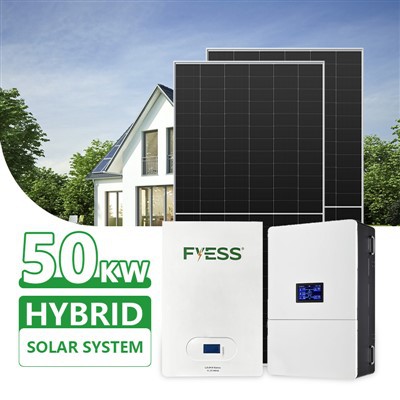
Wait, but what if you want a little more backup? That’s where the hybrid on grid system comes in. Unlike the standard no-battery setup, hybrid systems add a battery bank to store excess solar power. How does that mix with the grid? Let’s say a storm knocks out power for your neighborhood—since this system has a battery, you can use that stored solar power to keep your fridge running or your lights on, even when the grid is down. Here’s the catch: hybrid systems still stay connected to the grid, so you can still send extra power back when the sun’s out, but you get that backup buffer. It’s a great middle ground if you live in an area with frequent outages but don’t want to spring for a full off-grid setup (which is way more expensive). For businesses that might have critical equipment they can’t afford to lose, this is also a popular pick. Our On Grid Solar Power System page breaks down the difference between standard and hybrid, so you can see which fits your needs.
Next up, the AC-coupled on grid system. If you already have an older solar setup (maybe 5+ years old) that was installed with a string inverter, an AC-coupled system is a way to upgrade it without ripping everything out. Here’s the science: your existing panels make DC power, which goes to a microinverter (or a power optimizer) attached to each panel, turning it into AC right there. Then, that AC power connects to your main inverter, which ties into the grid. Wait, why would you do this instead of a full new setup? AC-coupled systems are perfect if you want to add more panels to an existing system or upgrade for better efficiency, especially if some of your old panels are underperforming. They also let you use power optimizers to fix issues like shading—if one panel is blocked by a tree, the rest still work at full power, instead of dragging the whole string down. If you’re retrofitting an existing setup, this is way more cost-effective than starting from scratch, and our Solar Energy System On Grid page has examples of retrofits we’ve done for customers over the years.
Then there’s the DC-coupled on grid system. This is a little less common, but it’s super efficient for certain setups. Unlike AC-coupled, which converts to AC at the panel and then again, DC-coupled systems keep the power as DC longer—so the panels send DC straight to a charger controller that feeds into a battery. That means fewer energy conversions, so less waste (solar systems lose a tiny bit of power every time they convert between AC and DC, so cutting one step adds up). Wait, but it’s still on grid, right? Yep—you can still connect to the grid for net metering, the battery just stores the DC power before it needs to be converted. This works great if you’re pairing your system with a larger battery bank (like if you need more backup power) or if you have a lot of roof space and want to maximize every bit of efficiency. It’s also a solid choice for commercial properties where energy costs are higher, since that efficiency adds up to bigger savings over time.
Let’s not forget about the single-phase vs. three-phase on grid systems, which are a big one for commercial and larger residential properties. Single-phase is what most homes use—it’s a 120/240V setup that powers standard appliances, lights, and AC. Three-phase is for bigger loads, like commercial equipment, electric vehicle chargers that are high-power, or large HVAC systems. If you run a small business, a restaurant, or have a big home with multiple electric cars, a three-phase on grid system is going to work way better than a single-phase one. It distributes power more evenly, so you don’t have to worry about blowing fuses when you turn on multiple big appliances at once. A lot of people skip this part and end up with a setup that’s not powerful enough, so it’s worth talking to someone who knows the difference—our team can help you figure out which phase you need based on your energy usage.
Now, I know what some of you are thinking: “What about off-grid systems? Why not just go fully independent?” Great question, but off-grid is a whole different ballgame—you need way more batteries, a backup generator, and way more panels, which makes it way more expensive upfront. On grid systems are designed to work with the grid, so you don’t have to invest in all that extra storage, and you still get savings every month. For most people, that’s the better move—unless you live in a super remote area where grid access is non-existent.
Let’s talk about what these different types mean for your wallet. Standard no-battery systems have the lowest upfront cost—usually between $15,000 and $25,000 for an average home in the US, before tax credits. Hybrid and battery systems can add $5,000 to $15,000 for the battery bank, depending on size. AC vs. DC coupled don’t usually add too much extra cost, but if you’re retrofitting, AC is cheaper than a full DC overhaul. The good news? The federal solar tax credit (in the US, at least) covers 30% of the cost of a new solar system through 2032, so that takes a big chunk off. And with net metering, most people pay off their system in 6 to 10 years, and then get free electricity after that.
Wait, but how do you pick which type is right for you? Let’s break it down quick:
- If you’re a homeowner with stable grid access and don’t need backup power: Go with the standard grid-tied system. It’s the cheapest, simplest, and gives the biggest long-term savings. Check out our Solar System for Home On Grid page to get a custom quote idea.
- If you live in an area with frequent outages and want a little backup: Hybrid system. You get the best of both worlds—grid access and emergency power.
- If you already have an old solar setup: AC-coupled retrofit. It’s easy to add panels or fix shading issues without redoing everything.
- If you’re a business or have high energy needs (multiple EVs, big equipment): Three-phase system, either standard or hybrid. It’ll handle the extra load way better than single-phase.
A common mistake I see people make is sizing their system too small. If you only cover 50% of your energy use, you’re not saving as much as you could. Our team always does a free energy audit to figure out exactly how many panels you need—we look at your past 12 months of electric bills, roof space, even how much shade your roof gets, to make sure the system is sized perfectly. We’ve had customers come to us after getting a quote from another company where they ended up with a system that was too small, so they’re only saving $20 a month instead of $100. That’s why it pays to work with someone who knows the different types and how to size them right.
Another thing to keep in mind: not all on grid solar systems are the same quality. A lot of cheap companies will cut corners on inverters or panels, which means your system won’t last as long or be as efficient. We use top-tier panels from brands that have 25-year warranties, and our inverters are rated to work reliably for 10+ years. We also handle all the permits and paperwork with your local utility, so you don’t have to deal with the headache of figuring out how to connect your system to the grid.
At the end of the day, choosing an on grid solar system isn’t just about picking the first option you see. It’s about understanding the different types, what they offer, and matching them to your specific needs. Whether you’re a homeowner looking to cut bills, a small business owner wanting to reduce operating costs, or someone who wants to be more eco-friendly, there’s an on grid setup that’s perfect for you.
If you’re ready to learn more, or want to get a custom quote for any of these systems, get in touch with our team. We can walk you through each type, answer any questions you have, and help you figure out the best fit for your home or business. Don’t wait to make the switch—solar saves you money and is better for the planet, too.
References
- U.S. Department of Energy. (2024). Solar Energy Technologies Office: Grid-Tied Solar Systems.
- International Energy Agency. (2023). Solar PV System Types and Market Trends.
- Solar Energy Industries Association. (2024). Net Metering Policies and System Efficiency.
- National Renewable Energy Laboratory. (2023). Hybrid Solar System Performance and Cost Analysis.