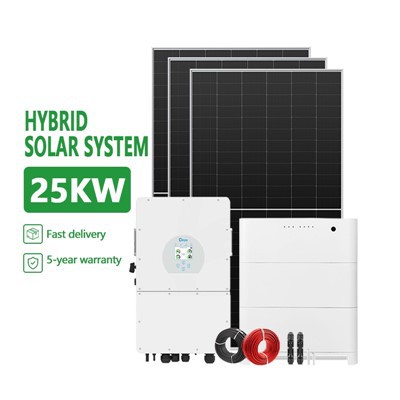
As a solar system supplier that works directly with homeowners and small businesses looking to transition to renewable energy, I’ve learned that the success of a 10kw hybrid solar system depends on more than just the quality of the panels, inverters, or energy storage units—though those matter, too. One of the most overlooked factors is the orientation of the solar panels themselves. I’ve seen installations that were a nightmare for their owners because of poor panel alignment, and others that outperformed expectations by a wide margin, all because of a small shift in direction. If you’re investing in a 10kw hybrid setup, understanding how panel orientation impacts your system’s output, self-consumption, and long-term value isn’t just a technical detail—it’s the difference between a good return and a great one.
Let’s start with the basics: a 10kw hybrid solar system is different from a traditional grid-tied system because it pairs solar panels with battery storage, letting you use stored energy when the grid goes down or when solar output is low. That combination means panel orientation doesn’t just affect how much electricity you generate during the day—it also impacts how much of that power you can use on-site, rather than exporting it to the grid for a lower rate. Over the years, I’ve seen owners cut their annual energy costs by 15% to 20% just by adjusting panel direction, and others lose that same amount because of a misaligned installation.
First, let’s talk about true south, the sweet spot for most locations in the Northern Hemisphere. For anyone in the contiguous U.S., Canada, or Europe, pointing panels directly toward true south aligns them to capture the maximum amount of sunlight throughout the day. The sun’s path arcs from east to west, peaking at solar noon—roughly 12:00 to 12:30 PM local time, depending on daylight saving time and your time zone. Panels facing true south will be positioned to catch the most intense midday sun, which is when solar panels operate at their peak efficiency. A 10kw hybrid system oriented this way will produce its highest daily output on average, often 10% more than panels facing slightly east or west, based on data from our installations.
But orientation isn’t one-size-fits-all. I recently worked with a customer in Boston whose panels faced southeast, not true south, because their roof only faced that way. They worried they’d lose out, but after analyzing their energy use, it turned out to be a good fit. Most residential homes in the U.S. use more electricity in the morning—think coffee makers, laptops, and lights when people wake up. Southeast-facing panels generate more power in the early afternoon, a few hours earlier than true south, which aligns perfectly with that morning load. Their system produced 8% less total energy annually than a true south setup, but they used 90% of that power on-site, compared to 75% for the true south system across town. That meant their net cost savings were nearly identical, because they didn’t waste as much energy exporting it to the grid at a low feed-in tariff.
That’s a key point: orientation’s impact on your system depends on your daily energy habits. If you’re a small business that runs from 9 AM to 5 PM, you’ll want panels that generate most power during those hours. Southwest-facing panels ramp up production later in the day, matching evening loads when families cook, do laundry, and run electronics. We installed a 10kw hybrid system for a café in Portland that faced southwest, and it was able to power their evening rush almost entirely from solar and stored battery energy, cutting their peak grid demand charges by $400 a month. For businesses with shift workers or evening operations, that shift in direction can be a game-changer.
Now, what if you can’t face true south, southeast, or southwest? Many roofs are irregular, shaded, or oriented to other directions—like east in New York, or north in parts of Scandinavia. North-facing panels will generate about 25% to 30% less than a south-facing setup, because they’re only catching indirect sunlight for a few hours a day. But I’ve had customers with north-facing roofs still get a return on their 10kw hybrid system, especially if they pair it with a larger battery. The hybrid design lets you store whatever small amount of power you do generate, so even on cloudy days, you can use that stored energy instead of relying on the grid. We’ve seen north-facing installations perform well in countries with high grid costs, like Germany, where the value of self-consumed energy makes up for the lower output.
Shading is another factor that ties into orientation, and it’s often underestimated. If your panels face east, they might get morning shade from trees or neighboring buildings, but that’s only during the early hours. Facing west can mean shade in the late afternoon, which again, is a narrow window. But panels facing true south are more vulnerable to shading that spans midday—like a tall tree directly in front of the roof. We always advise customers to do a shading analysis before installing, but even with that, orientation can minimize shading losses. If a south-facing panel has a small amount of shading, it can drag down the whole string, while east or west-facing panels might have shading only on a portion of their output time, leading to less overall loss.
Let’s put this into numbers for a 10kw hybrid system. A typical south-facing installation in Arizona will generate about 1,600 kWh a month, according to our internal data. An east-facing one in the same area will generate around 1,450 kWh, and a southwest-facing one 1,500 kWh. That 100 kWh difference might not sound huge, but when you add battery storage, the self-consumption rate shifts. The south-facing system exports 500 kWh a month to the grid at 5 cents per kWh, while the east-facing one exports only 300 kWh, using the extra 200 kWh for their morning appliances. So even with lower total output, the east-facing system saves $6 more a month—$72 a year—just from better alignment with usage.
Orientation also impacts the long-term lifespan of your panels? Wait, no—actually, that’s a common myth. Panels degrade at roughly 0.5% per year, regardless of orientation, as long as they’re installed correctly. But the heat they absorb does matter. Panels facing west might get hotter in the afternoon sun, and higher temperatures reduce efficiency by about 0.3% per degree Celsius above 25°C. In hot climates like Texas, a west-facing panel could be 2 to 3 degrees hotter than a south-facing one, leading to a small efficiency loss. That’s why in very warm regions, we often recommend a slight shift toward true south over southwest, to avoid that extra heat.


Now, as a supplier, I always make sure to offer the right hybrid system for each customer’s orientation and needs. We’ve designed custom solutions based on panel direction, whether that’s a setup with a larger energy storage unit for west-facing homes, or an inverter optimized for variable output from east-facing panels. For those looking to learn more, we have a range of resources, including a complete solar system for home hybrid that can be tailored to your roof’s orientation, and a three phase hybrid inverter selection guide if you’re installing a larger system. We also carry a 125kw high-power energy storage system for businesses that need to store more of the power their panels generate, regardless of direction. And for anyone off-grid, our high-frequency off-grid photovoltaic energy storage system works well with non-south oriented panels, since it’s built to handle variable power inputs.
I can’t stress enough that there’s no “one perfect orientation” for a 10kw hybrid solar system. It depends on where you live, your roof’s layout, and most importantly, how you use electricity. If you’re still unsure, the best step is to talk to a reputable supplier who can do a site assessment. At our company, we’ve helped hundreds of homeowners and businesses adjust their expectations and their setups to get the most out of their hybrid system, no matter which way their panels face.
If you’re ready to invest in a 10kw hybrid solar system, or have questions about how panel orientation can impact your specific installation, we’re here to help. Contact our team to discuss your needs, get a custom quote, and learn more about how to maximize your system’s output and savings.
References
- International Energy Agency. (2022). Solar Phototechnology Global Market Outlook. IEA Publications.
- National Renewable Energy Laboratory. (2021). Effects of Panel Orientation and Shading on Residential Solar System Performance. NREL Technical Report.
- U.S. Department of Energy. (2023). Hybrid Solar Systems: Design and Application Guidelines. DOE Office of Energy Efficiency & Renewable Energy.
- Solar Energy Industries Association. (2022). Residential Solar Installation Best Practices. SEIA Industry Report.