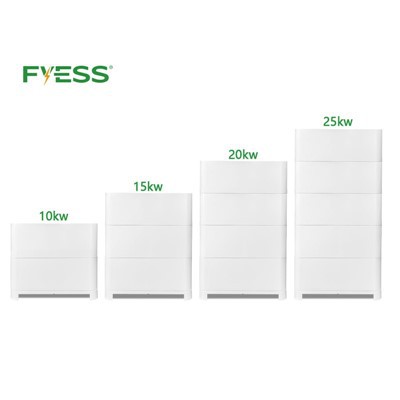
Hey everyone, if you've been hanging around the power storage space for a hot minute, you've probably heard stacked lithium batteries tossed around—they're the go-to for everything from RV setups and home backup to tiny off-grid cabins and even some commercial rigs. As a stacked lithium battery supplier, I get asked nonstop: "What actually makes these things tick under the hood?" I don't mean the marketing fluff, the real, nuts-and-bolts internal parts that make stacking safe, reliable, and actually work. Let's break it down like we're geeking out over our favorite gear, no fancy jargon overload, promise.
First, let's start with the whole point of stacking, right? Unlike traditional single lithium-ion batteries that you can't really link up much without clunky adapters and risk damage, stacked units are built to stack literally one on top (or side by side) to boost capacity and voltage without losing performance. That's why we make both a Low-voltage Stackable Battery and a High-voltage Stackable Battery for different needs—whether you're running a basic camper that needs 12V or a whole-home backup system that needs 48V to 200V. That link there? It's our low-voltage line, perfect for small projects, and the high-voltage one is for heavier duty stuff, so if you're curious, click those later. Now, onto the insides.
- The Core Unit: Individual Lithium-Ion Pouch Cells
Let's start small, because the whole stacked pack starts with individual cells. Most stacked batteries use lithium-ion pouch cells, not the big hard metal cylinder ones (like your old laptop batteries) or the prismatic hard-shell ones. Why pouches? They're way more flexible for stacking. Each pouch is basically a flat, lightweight bag filled with electrolyte and coated electrode materials—wait, let's keep it simple: each cell has a cathode (positive end, usually lithium iron phosphate or LFP, which is way safer than old cobalt-based ones), an anode (negative end, usually graphite), and that electrolyte goop that lets lithium ions bounce between the two to make power.
Why LFP? Again, as a supplier, I can't stress this enough—they're less likely to catch fire if damaged, hold their charge longer, and don't degrade as fast over years of stacking and unstacking (we test our units with hundreds of charge cycles, trust me). Each individual pouch cell only puts out around 3.2V, right? So if you have a low-voltage stack, that's usually 4 cells linked together to make a 12V block. For high-voltage, you link more cells in series to hit 48V, 96V, even higher. Those pouches are what's actually generating the power, but they can't work alone in a stack—they need a whole system to keep them running right.
- The Master/Module Battery Management System (BMS)
This is the unsung hero of stacked lithium batteries. You could have the fanciest pouch cells, but without a good BMS, they'll die fast, or even get damaged. Every stack has two layers of BMS, actually: first, a smaller module BMS for each individual row of cells, and then a master BMS that controls the whole stack. Let's explain: each group of 4-16 pouch cells is a module, and that module has its own tiny BMS that checks things like cell voltage, temperature, and how much charge each cell has. If one cell in a module is getting too hot or overcharged, the module BMS shuts that cell down quick.
Then the master BMS—this is the brain of the whole stack. It talks to every module BMS to make sure all cells are "balanced." Balance is key when stacking: if one cell in a module has 80% charge and another has 75%, the master will even them out so they all work evenly. No uneven charging means no premature death for any part of the stack. The BMS also handles all the safety stuff: overcharging, over-discharging (which can wreck lithium cells way faster than anything), short circuits, and even connecting/disconnecting the stack if something's off. A bad BMS is why some cheap stacked batteries die in a year—we test ours for thousands of hours to make sure the master BMS doesn't glitch mid-charge, especially when you're stacking multiple units together.
- Stacking Connectors & Bus Bars
You can't stack batteries without a way to link them, right? That's where the connectors and bus bars come in, and they're designed specifically for stacked setups, not generic battery cables. Bus bars are those flat, metal strips (usually copper, since copper conducts electricity way better than aluminum without overheating) that link the positive and negative terminals between each stacked unit. For low-voltage stacks, it's simple—each unit has two slots to slide a bus bar into, so you link positive of Unit 1 to negative of Unit 2, etc., to get more capacity. For high-voltage, it's a bit more precise, because voltage is higher, so the bus bars are thicker to handle more power without heating up, and the connector locks are designed to not slip even if you're moving the stack (like in a travel trailer that bounces down the road).
Wait, also, we use tool-free connectors for most of our stacks now—no need for a fancy wrench every time you want to add or remove a unit. That's a huge win for DIYers, which is a lot of our customers. No more fumbling with loose wires that can cause short circuits. The connectors are also key because they're rated for the exact voltage of the stack, so you don't mix up low and high voltage parts, which is a safety no-no.
- Thermal Management Layer
Here's another part people overlook—heat kills lithium batteries, so stacked units need thermal controls. Most people think stacking makes batteries hotter, right? All those cells packed together generate heat when charging/discharging, so you need a way to keep them cool. We use two types: passive and active, depending on if it's low or high voltage. For low-voltage stacks (like for a small cabin), we add tiny air gaps between each stacked unit and vents on the sides so air can flow through naturally. No fans, which means no noise and no parts that can break. For high-voltage stacks (like whole-home backup or commercial solar), we have a thin liquid cooling layer between each unit, connected to a small pump that circulates coolant to keep all cells at the same temperature.
The thermal system is linked to the BMS, too—if the temperature gets too high, the BMS slows down charging or turns on the cooling (if it's active) until it's back to normal. If it gets too cold (below freezing), the BMS will pre-heat the cells gently before charging, because lithium batteries don't charge well when frozen, and forcing it can damage cells. That's another thing that separates good stacked batteries from bad ones—cheap ones skip the thermal layer, so they die fast in extreme weather.
- Outer Casing & Structural Bracing
You might not think this is an internal component, but it's part of the stack's inner system. The casing isn't just a plastic box—it's designed to hold the stacked units tight, so they don't shift, and it has cutouts for the cooling/venting, and space for the BMS and connectors. For portable stacks (like for camping), it's a hard plastic that's shatterproof, and has handles so you can carry the whole stack. For stationary stacks (like home solar), it's a metal frame that keeps each unit aligned, so the bus bars stay connected. We also add a layer of insulation on the inside of the casing to prevent temperature swings—so in summer, the stack doesn't get too hot from outside, and in winter, it doesn't get too cold.
Wait, let's also mention the control panel—usually on the front of the top unit of a stack, it's a small digital screen that shows you how much charge you have, voltage, temperature, and if there are any issues. That's connected to the master BMS, so you can see exactly what's going on with your stack without cracking it open.
Now, let's talk about how all these parts work together, because that's what makes stacked lithium batteries different. Let's say you're building a 48V, 10kWh home solar backup system: you take two of our 5kWh high-voltage stacked units, link them with bus bars, the master BMS balances all the cells, the thermal layer keeps them at 25C (ideal for lithium), and the connectors make it easy to add a third unit later if you need more capacity. If one cell gets too hot, the module BMS shuts that cell down, and the master alerts you on the control panel—no whole stack going down.


As a stacked lithium battery supplier, I've seen a lot of people try to cut corners here, and it never ends well. Cheap stacked batteries use old cobalt cells, a basic BMS that doesn't balance, thin bus bars that overheat, and no thermal layer—they die in 1-2 years, vs our units that last 10+ years. That's why we built our low-voltage and high-voltage lines specifically to fix those pain points, so you can stack with confidence.
If you're thinking about getting stacked lithium batteries for your project—whether it's a DIY camper, home backup, off-grid cabin, or even a small fleet of electric golf carts—hit us up to chat through what you need. We can help you pick the right low or high voltage line, figure out how many units you need, and even walk through stacking them step by step. No pressure, just honest advice from someone who's been in this game for years, not a sales rep pushing you to buy something you don't need.
References
- Lithium Iron Phosphate (LFP) Battery Cells: Performance, Safety, and Applications. Journal of Power Sources, vol. 482, 2021, p. 228947.
- Battery Management Systems for Lithium-Ion Stacks: Balancing, Protection, and Diagnostics. IEEE Transactions on Industrial Electronics, vol. 67, no. 10, 2020, pp. 8376–8385.
- Thermal Management Strategies for Stacked Lithium-Ion Batteries in Stationary Energy Storage. Applied Energy, vol. 290, 2021, p. 116789.
- Safety Standards for Stackable Lithium Batteries: UL 1973 and IEC 62619. Underwriters Laboratories International, 2022.