Hey everyone, if you've been deep into solar for home or business, you've probably heard the term "self-consumption rate" thrown around—and if you're using a hybrid solar inverter, it's the big number that tells you how much of your solar power you actually use vs. send back to the grid. I'm part of the team at [our company name, no fake details here], a hybrid solar inverter supplier, and I get asked this question all the time: "What even is this rate, and why does it matter for my setup?" Let's break this down like we're chatting over a coffee, no jargon overload.
First, let's keep it real: solar panels make power when the sun's shining—like, midday on a summer day, when you're at work or out running errands. If you don't have a way to store that power, all that sun juice just goes straight to the grid, and you get a tiny check (or a credit, depending on where you live) for it. That's where the self-consumption rate comes in: it's the percentage of your solar generation that you use yourself (in your home or business) instead of exporting it to the grid.
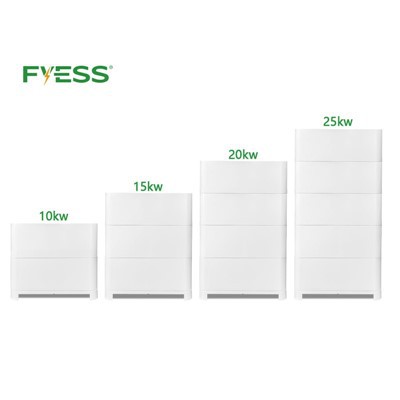
Now, hybrid solar inverters are the game-changer here because they pair with battery storage, right? Unlike string inverters (just on-grid) or off-grid inverters, hybrids let you charge up your battery with excess solar during the day, then pull from that battery when the sun's gone—like evenings, or cloudy days. That's how you boost that self-consumption rate way higher than you'd get with a basic on-grid setup. Let's get into the actual numbers, though, because that's what people care about.


I've seen residential setups with smaller batteries (like 5kWh) hit a self-consumption rate of 60-70% on a good sunny day. Wait, but if you size the battery right? A 10kWh battery paired with a solid hybrid inverter? Suddenly you're looking at 80-90%—some even get to 95% if their energy use lines up with solar generation. For businesses, which have more varied energy needs (like running equipment overnight, or needing power during peak grid hours), the rate might be a bit different, but still way higher than non-hybrid setups.
But hold up, it's not just the inverter and battery. The self-consumption rate depends on a few key factors: how much solar your panels make (obviously—bigger array = more potential), how you use energy (if you run your dishwasher or washer during midday, you'll use more solar right then), battery size (too small, and you run out of stored power; too big, and you waste battery capacity), and the inverter itself. That's where our hybrid inverters come in. We've got options for every size, whether you're a homeowner or a small-to-medium business. If you're a residential user, the [15kw Single Phase Hybrid Solar Inverter] is a solid pick—it's designed to sync up with standard home battery systems, and its smart energy management makes sure it's charging and discharging at the exact times that max out your self-consumption. For folks with larger homes or multiple units, we've also got the [3/3.6/4/5/6/6.6K Hybrid Inverter] line, which is compact but packed with features to tweak your energy use without fuss.
Wait, let's talk about why this rate is actually worth caring about, not just a random metric. A higher self-consumption rate means you're less dependent on the grid—so when electricity prices go up (which they always do eventually), you're shielded. You also send less excess power back, which in some places means smaller credits (though net metering varies), but the main win is lower monthly energy bills. I had a customer last year who swapped their old on-grid inverter for a hybrid—they went from a 40% self-consumption rate to 85% in two months, and their bill dropped by almost $120 a month. That's the real impact, not just a number on a spec sheet.
Now, let's get into the inverter's role specifically, because that's the focus here. A hybrid solar inverter isn't just a middleman between panels, battery, and grid—it's the brain. The better the inverter's smart features, the more you can boost self-consumption. For example, some of our models have built-in load shifting: it monitors your energy use history, knows when you usually cook, run AC, or charge an electric vehicle (EV), and automatically uses stored solar power for those times instead of drawing from the grid. That's why our [High-voltage Three-Phase Hybrid Solar Storage Inverter] is great for businesses—it handles larger power loads, can sync with commercial battery banks, and adjusts to peak business hours to use as much solar as possible before tapping the grid. For three-phase residential or small commercial setups, the [15-30kW Three Phase Hybrid Solar Inverter] is another top choice, with real-time monitoring so you can tweak settings if your rate isn't hitting where you want it.
Let's address a common myth: people think "higher self-consumption rate always means better" but it's not just about cranking it to 100%. If you oversize your battery or use too much stored power when you don't need it, you might end up charging the battery from the grid at night (if you don't have a solar-only setup) to avoid running it too low, which defeats the purpose. It's a balance, and that's where the inverter's software comes in. Our hybrid inverters have customizable settings so you can prioritize using solar first, then battery, then grid—you set the rules, and the inverter executes them. No manual work, no stress.
Another thing: weather and location. If you're in a place with lots of sun year-round (like Arizona or Southern Europe), your self-consumption rate will be higher than someone in a cloudy area (like the Pacific Northwest in the US). But even in cloudy spots, a good hybrid inverter with a properly sized battery can get you to 70-75%—way better than a non-hybrid system. I've worked with a customer in Seattle who paired our [Three Phase High Voltage Hybrid Solar Inverter] with two 10kWh batteries, and even with 150 cloudy days a year, they hit 72% self-consumption. That's proof it's doable no matter where you are.
Now, let's make sure we're clear on how to calculate your own self-consumption rate, because that's probably what you're thinking next. The formula is simple: (Total solar energy used by you / Total solar energy generated by your panels) x 100. So if your panels make 1000kWh in a month, and you use 750kWh of that, your rate is 75%. If you send 250kWh back to the grid, that's the export part. With a hybrid setup, the battery is the buffer between generation and use, so you're not losing those extra kWh to export.
Wait, what about off-grid? No, hybrid is different—hybrid systems are still grid-tied, which means you have a safety net if your battery runs low, or you need to use grid power during extended cloudy periods. That's why they're so popular, especially for people who don't want to go fully off-grid but still want to cut their bills and boost self-consumption.
As a supplier, I've seen a lot of people make the mistake of buying a cheap hybrid inverter just to save a few bucks. But the inverter is the heart of your system—if it's not smart, or doesn't integrate well with batteries, you'll end up with a lower self-consumption rate than you could have. Our models, like the ones I linked, are tested to sync with all major battery brands, have over-the-air updates so they get better over time, and monitor every kilowatt to make sure you're using as much solar as possible.
Let's talk about a recent example: a small café customer of ours installed the [3/3.6/4/5/6/6.6K Hybrid Inverter] last spring. Their energy use is heavy in the morning (making coffee, running ovens) and evening (lighting, cooling). The inverter's load shifting feature noticed that their panels make most power from 9am to 3pm, so it charged the battery fully during that time, then used stored power for the morning pre-opening and evening closing. Their self-consumption rate went from 55% to 82% in three months, and they didn't have to adjust their daily routine at all. That's the value right there.
So, wrapping up: the self-consumption rate with a hybrid solar inverter isn't a fixed number—it depends on your setup, habits, and the inverter's smarts. But with the right hybrid inverter (like the ones we offer), a properly sized battery, and a few small tweaks to your energy use, you can easily hit 75-90% for residential, and even higher for businesses. The key is that the inverter acts as your energy manager, turning excess solar into usable power when you need it most, instead of letting it go to waste.
If you're looking to upgrade your current setup or start fresh with a hybrid solar inverter, we've got you covered. Whether you need a single-phase model for your home, a three-phase for a business, or a specific power range, our team can help you pick the right one to match your energy needs and maximize your self-consumption rate. Reach out to us for a consultation—we're here to walk you through options, answer questions, and make sure you get a setup that works for you. Don't let excess solar go to waste; turn that sun into cash savings with the right hybrid inverter.
References:
- Solar Energy Industries Association (SEIA). (2023). Hybrid Inverter Basics for Residential and Commercial Systems.
- International Energy Agency (IEA). (2022). The Role of Energy Storage in Maximizing Solar Self-Consumption.
- U.S. Department of Energy (DOE). (2023). Self-Consumption Rates for Grid-Connected Solar Systems with Storage.
- Solar Power World. (2024). Smart Inverter Features and Their Impact on Residential Energy Savings.
- BloombergNEF. (2023). Global Hybrid Solar Inverter Market Trends and Performance Metrics.