If you’re a small business owner or homeowner who’s already made the switch to off-grid solar, you’ve probably asked yourself: “Can I expand my off grid solar system in the future?” It’s a question I hear all the time in my work as an off-grid solar system supplier—mostly from customers who’ve just installed a setup that meets their current needs, but who are planning ahead for when they add new appliances, a workshop, extra rooms, or even power for an electric vehicle. The short answer is yes, but it’s not as simple as just buying more solar panels and hooking them up. There are a lot of factors to get right to make sure your expansion works safely, efficiently, and without wasting money. Let me walk you through what I tell every customer who’s curious about growing their off-grid system, using real examples from projects we’ve completed over the last 10 years.
First, let’s start with the foundation of your current system. If you’re like most of our residential customers, your initial setup is probably something like a 5kw Solar System Off Grid, which is enough to power a small home with basic appliances: a fridge, lights, a TV, and a well pump. A 5kW system works for about 1,000 to 1,200 kilowatt-hours (kWh) of electricity per month, give or take, depending on where you live and how much sun you get. But if you suddenly decide to add a commercial freezer for a small business, a pool pump, or an EV charger, that’s going to add 500 to 1,500 kWh per month—maybe even more. That’s where planning ahead really pays off.


When we install an off-grid system, we always build in a little extra “headroom” if a customer mentions they might expand later. Headroom is basically the extra capacity in your system’s core components that lets you add more power without replacing everything. The two most important components to check for headroom are your solar inverter and your battery bank. Your inverter is the heart of the system—it turns the DC power from your solar panels into AC power that runs your appliances. If you have a 5kW inverter, can you upgrade it to a 7.5kW or 10kW inverter later without tearing out all the wiring? That depends on how you sized it initially. If we use high-quality inverters that are expandable (many modern off-grid inverters let you parallel units), we can add a second inverter down the line to boost capacity instead of starting over.
Your battery bank is even more critical. Batteries store the excess power your solar panels generate during the day to use at night or on cloudy days. Most off-grid batteries are lithium-ion these days, and they come in modules that you can add to over time. If your initial battery bank is a 10 kWh lithium setup, expanding it to 20 kWh or 30 kWh is usually just a matter of buying extra modules and connecting them in parallel. But you have to make sure your inverter and solar charge controller (which regulates how much power goes into the batteries) can handle the larger battery bank. For example, a 5kW charge controller might work for a small battery, but if you double the battery size, you’ll need a charge controller that can handle the higher current. One mistake I see all the time is customers who cut corners on their initial charge controller to save money, only to find they can’t expand their battery bank later without replacing it. That’s why we always recommend using components that are designed for scalability, even if they cost a little more upfront.
Next, let’s talk about the solar panels themselves. If you have a rooftop system with space to add more panels, expanding your panel array is one of the easiest parts of the process. But again, size matters. Let’s say your current system has 16 300-watt panels, totaling 4.8kW (close to that 5kw off-grid system we mentioned earlier). If your roof has space for another 10 panels, you can add them, but you need to make sure your inverter and charge controller can handle the extra DC power. If you try to add more panels than your system can handle, you’ll be wasting money because those extra panels won’t charge your batteries as efficiently, and you could even damage your charge controller. On the other hand, if you install a system that has enough space for, say, twice as many panels as you need initially, you can add them when you’re ready without upgrading the rest of your system. We often advise customers who know they’ll need more power in 5 to 10 years to size their panel array for future expansion, even if they only buy enough panels for their current needs at first.
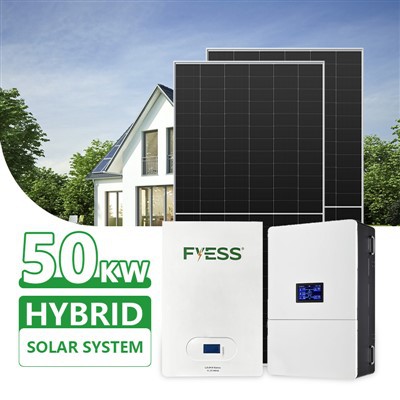
For larger scale projects, like if you’re a small farmer or a business that needs more power, you might be thinking about something like a 50KW On Grid Solar System—but wait, 50kW is actually for commercial use, and as an off-grid system, that’s a whole different ballgame. A 50kW off-grid system would require a much bigger battery bank (maybe 100 kWh or more) and multiple inverters working in parallel. If you have a small residential system and later want to scale up to a business-sized setup, you’ll need to make sure your land has enough space for more solar panels, and that your electrical service is rated for the extra power. For example, if you run a small workshop off your home’s current system, adding power for tools, air compressors, and heating could push your needs from 5kW to 15kW, which would require a bigger inverter, more batteries, and more panels. If your initial system is set up to accommodate that kind of growth, it’s a smooth process; if not, you might have to rework your entire setup.
Another thing to consider is the type of off grid solar power system you have. There are three main types: grid-tied with battery backup, pure off-grid, and hybrid. Pure off-grid systems (which are completely independent of the utility grid) are the most flexible for expansion because they don’t have to deal with grid interconnection rules. Hybrid systems, which can tie into the grid but also run on batteries, have some limitations on expansion because of grid regulations, but they can still be scaled up for off-grid operation. Grid-tied with battery backup is the least flexible if you want to go fully off-grid later, but if you just want to add more battery storage, that’s still possible. When you’re choosing your initial system, it’s worth talking to your supplier about which type gives you the most room to grow.
I’ve seen customers make the most of their off-grid systems by planning ahead. Last year, we installed an Off Grid Solar System for Home for a family in northern Minnesota. They had a small cabin and wanted to add a guest house in three years, plus a garage with a workshop. When we put in their initial system, we used an expandable inverter, a 15 kWh battery bank with room for two more modules, and left 10 empty spots on their roof for solar panels. A year later, they added the guest house, and we just installed two battery modules and four extra panels—no need to replace any existing components, and their system works just as well as it would have if we’d installed a bigger system from the start. They told us they saved about $2,000 by not overbuying equipment they didn’t need right away.
Of course, there are some limits to how much you can expand an off-grid system. If your roof only has enough space for 10 panels, you can’t add more panels unless you build a ground-mounted array or extend your roof. If your lot is small, that might not be possible. You also have to consider the amount of sunlight your location gets. If you live in a place with very little sun, like parts of Alaska, expanding your panel array might not give you as much extra power as it would in Arizona or California. In those cases, you might need a bigger battery bank or even a backup generator (though generators kind of defeat the purpose of off-grid solar, they’re a necessary backup in very low-sun areas).
Another common question I get is: Is it worth expanding my system instead of replacing it? For small to medium increases in power (like 5kW to 10kW), expanding is almost always worth it. It’s cheaper than buying a whole new system, and you can reuse your existing inverter, charge controller, and even some of your panels if they’re still in good shape. For larger expansions, like going from a 10kW to a 30kW system, it might be worth looking at a new system, but even then, you can often reuse some components, like existing panels if they’re high-quality.
When you’re ready to expand, there are a few steps you should take to make sure it goes right. First, do a power audit of your current and future needs. List every appliance, tool, and device you’ll use, and how much power each one draws (look for the wattage on the label). Add up the total, plus 20% extra for safety (this is called “overhead” in solar terms). That will tell you how much extra power you need to add. Second, have your supplier do a check of your existing system to see how much headroom you have in your inverter, charge controller, and battery bank. Third, get quotes for both expanding your current system and installing a new one—sometimes the numbers might surprise you, and expanding could be cheaper.
If you’re still not sure whether your system is expandable, don’t hesitate to ask your supplier. At our company, we’ve helped hundreds of customers expand their off-grid systems, from small home setups to larger commercial ones. We offer everything from initial installations to expansion projects, and we can help you design a system that grows with your needs. For example, if you’re starting out with the Off Grid Solar Energy System for your home, we can customize it to have the capacity you’ll need in the future.
Wait, let’s circle back to that initial question: “Can I expand my off grid solar system in the future?” The answer is definitely yes, but it depends on how you size and design your system from the start. If you cut corners on components that aren’t scalable, you might have to start over. If you plan ahead and choose expandable parts, you can add power as your needs grow, saving you time and money in the long run. I always tell my customers that off-grid solar is an investment that should last 20 to 30 years, so thinking about your needs 5, 10, even 15 years down the line is smart.
I’ve also seen some customers who don’t plan ahead and end up stuck. A few years ago, we had a customer who installed a cheap 3kW off-grid system for his vacation home, with a small inverter and battery bank. A year later, he wanted to move into the home full-time, adding an electric heat pump and a bigger well pump. His system couldn’t handle the extra load, and because he’d used non-expandable components, he had to replace the inverter, charge controller, and battery bank—costing him almost twice as much as it would have to install an expandable system initially. That’s a mistake we try to help people avoid.
So, to recap: Expanding your off-grid solar system is possible, but it requires planning. Start by choosing components with expandability in mind—especially your inverter, charge controller, and batteries. Do a power audit of your current and future needs, make sure you have space for more solar panels (either on your roof or on the ground), and check the amount of sunlight in your area. If you’re starting from scratch, a system like the 5kw Solar System Off Grid is a great starting point for many homes, especially if you leave room to expand later. For larger projects, the 50KW On Grid Solar System might be a fit, but make sure you work with a supplier who knows how to design scalable commercial off-grid systems.
At the end of the day, off-grid solar is all about independence—independence from utility bills, from blackouts, from rising energy costs. Being able to expand your system as your life changes means that independence can grow with you, whether you’re adding a new family member, starting a small business, or just wanting a little more comfort in your home. If you’re ready to start planning your off-grid solar system, or if you already have one and want to talk about expanding, reach out to our team to start the conversation. We can walk you through your options, help you assess your current system, and design a plan that works for your needs and your budget.
References:
- International Energy Agency. (2023). Off-Grid Solar Systems: Scalability and Future Growth.
- Solar Energy Industries Association. (2022). Expandability in Residential Off-Grid Solar Systems.
- National Renewable Energy Laboratory. (2021). Scaling Considerations for Off-Grid Solar Power Systems.
- North American Board of Certified Energy Practitioners. (2020). Design Guidelines for Expandable Off-Grid Solar Systems.